
Ads
Ads
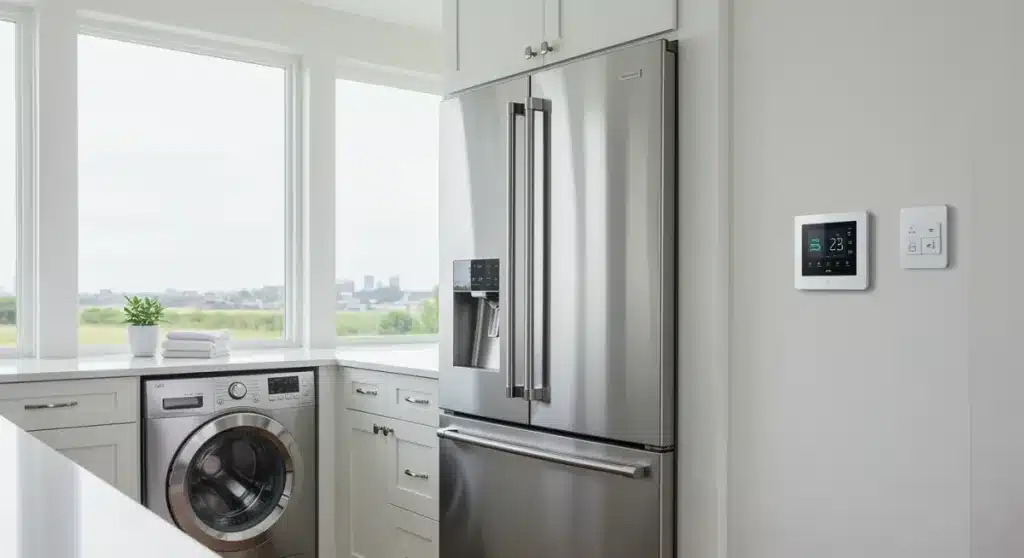
The 2026 appliance energy standards introduce stricter efficiency requirements that can reduce household energy consumption by up to 20%.
Ads
If you have ever opened your monthly electricity bill and wondered why it remains so high despite your best efforts to conserve energy, the appliances in your home might be the culprit. Starting in 2026, new federal efficiency standards will transform how manufacturers design and consumers select household appliances. These regulations promise not only environmental benefits but also substantial financial savings for American households willing to understand and adapt to the changes.
Understanding the 2026 Appliance Energy Standards
The Department of Energy has finalized new efficiency standards that will take effect in 2026, representing the most significant overhaul of appliance regulations in over a decade. These standards target major household appliances including refrigerators, dishwashers, washing machines, and dryers, establishing stricter consumption limits that manufacturers must meet before selling their products in the United States.
These new regulations emerge from years of technological advancement and environmental advocacy. As energy costs continue to rise and climate concerns intensify, the federal government recognized that outdated efficiency standards were no longer serving American consumers or the planet adequately. The 2026 standards aim to address this gap by requiring appliances to perform significantly better than previous generations while maintaining or improving functionality.
Key Appliances Affected
- Refrigerators and freezers will require 25% less energy than current models
- Dishwashers must reduce water and energy consumption by approximately 15%
- Washing machines will face stricter water efficiency requirements
- Dryers must incorporate heat pump technology in many configurations
The impact of these standards extends beyond individual households. According to the Department of Energy, full implementation of the 2026 standards could save Americans collectively billions of dollars in utility costs while reducing greenhouse gas emissions by millions of tons annually. This dual benefit explains why environmental advocates and consumer protection groups have largely supported the new regulations.
Key Changes in Refrigerator Efficiency Requirements
Refrigerators represent one of the largest energy consumers in any home, operating continuously throughout the year. The new 2026 standards address this reality by implementing the most stringent efficiency requirements ever mandated for residential refrigeration units. Manufacturers must now design refrigerators that use substantially less electricity while maintaining optimal food preservation capabilities.
The changes affect both traditional top-freezer models and modern side-by-side configurations. Energy consumption limits have been reduced across all categories, pushing manufacturers to adopt advanced insulation materials, more efficient compressors, and improved door seal technologies. Consumers will notice that new refrigerators in 2026 will often feature improved temperature management systems that use less power while providing better food preservation.
What This Means for Consumers
- New refrigerators will cost slightly more upfront but save money over their lifetime
- ENERGY STAR certification will become even more meaningful under new standards
- Older refrigerators will become increasingly expensive to operate relative to new models
- Smart features like adaptive defrost will become standard rather than premium
When shopping for a new refrigerator in 2026 and beyond, consumers should pay close attention to the yellow EnergyGuide label that provides estimated annual operating costs. The difference between an older model and a new compliant refrigerator can represent savings of fifty dollars or more annually, making the premium for an energy-efficient model worthwhile for most households.
How New Washer and Dryer Standards Impact Your Wallet
Laundry appliances represent another major category affected by the 2026 standards, with particular focus on water heating energy consumption. Washing machines have long been recognized as significant water and energy users, and the new regulations address both aspects of consumption. The standards require manufacturers to incorporate more efficient water usage patterns without sacrificing cleaning performance.
Front-loading washing machines have already demonstrated superior efficiency compared to traditional top-loaders, and the 2026 standards will accelerate this transition. Consumers can expect that most new washing machines will feature front-load or hybrid designs that use significantly less water while providing equal or better cleaning results. The reduction in water heating energy alone can represent substantial savings for households that do multiple loads daily.
Dryer standards present perhaps the most significant change, with heat pump technology becoming increasingly common in new models. Heat pump dryers recycle heat rather than generating new heat for each cycle, reducing energy consumption by approximately 40% compared to conventional electric dryers. While these models currently carry a premium price, the new standards will drive competition and eventually reduce costs for consumers.
Financial Benefits of Laundry Efficiency
- Average household can save $100 or more annually on utility bills
- Reduced water consumption lowers both water and heating costs
- Heat pump dryers dry clothes more gently, extending garment lifespan
- ENERGY STAR certified washers use up to 50% less water than standard models
The financial case for upgrading laundry appliances becomes stronger with each passing year as energy costs rise and new standards make older models increasingly obsolete. Households that currently operate aging washing machines and dryers should seriously consider replacement before the full impact of the new standards takes effect.
Smart Appliances: The Technology Behind Energy Savings
The 2026 appliance standards coincide with a remarkable period of technological advancement in household devices. Smart appliance technology has matured significantly, offering consumers unprecedented ability to monitor and optimize energy consumption. These intelligent features work alongside the new efficiency standards to maximize savings potential.
Modern smart refrigerators can adjust compressor speed based on usage patterns, optimizing cooling while minimizing energy waste. Smart dishwashers can delay cycles to take advantage of off-peak electricity rates while optimizing water usage based on load soil levels. Washing machines with smart capabilities can download specialized cycles for different fabric types while optimizing water and energy consumption for each load.
Smart Features Worth Having
- Energy usage monitoring through smartphone apps
- Load-sensing technology that adjusts water and energy automatically
- Scheduling capabilities to run appliances during off-peak hours
- Maintenance alerts that prevent energy-wasting malfunctions
The integration of WiFi connectivity and artificial intelligence in appliances represents a fundamental shift in how households can manage energy consumption. Rather than simply purchasing efficient appliances, consumers can now actively participate in optimizing their energy usage through smart technology. This combination of hardware efficiency and software intelligence creates opportunities for savings that previous generations of appliances simply could not provide.
Calculating Your Potential Savings Under New Standards
Understanding the potential savings from the 2026 appliance standards requires examining both direct and indirect benefits. Direct savings come from reduced utility bills when operating more efficient appliances, while indirect benefits include extended appliance lifespans, reduced maintenance costs, and increased home value. Most analyses suggest that households can achieve approximately 20% reduction in appliance-related energy consumption by upgrading to compliant models.
The actual dollar savings vary significantly based on local utility rates, household usage patterns, and the specific appliances being replaced. A household in a region with high electricity rates will naturally see greater benefits from efficiency improvements. Similarly, households with high appliance usage will experience more substantial savings than those with minimal daily operation.
Sample Annual Savings Estimates
- Refrigerator upgrade: $40-$80 annually depending on model
- Washing machine upgrade: $30-$60 annually on water heating
- Dryer upgrade with heat pump: $50-$100 annually
- Dishwasher upgrade: $15-$30 annually
These estimates assume average usage patterns and current utility rates, which continue to increase in most regions. When calculating return on investment for new appliance purchases, consumers should consider not only the purchase price premium for efficient models but also the lifetime operating cost savings. In many cases, the total cost of ownership for a more efficient appliance proves lower than purchasing a cheaper, less efficient alternative.
Practical Steps to Maximize Energy Efficiency at Home
While purchasing new compliant appliances represents the most significant step toward energy savings, households can take additional actions to maximize their efficiency gains. These practical measures work in conjunction with modern appliances to create comprehensive energy reduction strategies that benefit both the environment and household budgets.
Proper installation and maintenance of appliances dramatically affect their efficiency. Refrigerators require adequate clearance from walls and proper door seal maintenance to operate efficiently. Dishwashers and washing machines benefit from regular cleaning of filters and spray arms. Dryers require periodic cleaning of lint traps and exhaust vents to maintain optimal airflow and heat transfer.
Maintenance Tips for Optimal Efficiency
- Clean refrigerator coils twice yearly to maintain cooling efficiency
- Check and replace door seals on refrigerators and freezers annually
- Run washing machine cleaning cycles monthly to prevent residue buildup
- Clean dryer lint traps after every load and exhaust vents quarterly
Beyond maintenance, household behavior significantly impacts energy consumption. Running dishwashers only with full loads, using appropriate cycle settings for each load type, and taking advantage of energy-saving features all contribute to maximum efficiency. Smart appliances can automate many of these behaviors, but informed human operation remains essential for optimal results.
What to Look for When Purchasing Appliances in 2026
The arrival of new efficiency standards changes the landscape of appliance shopping. Consumers should understand what to look for when navigating showrooms and online stores to ensure they make decisions that serve their long-term interests. The changes are significant enough that purchasing strategies developed in previous years may no longer apply.
First and foremost, shoppers should look for the ENERGY STAR certification, which indicates that a model meets or exceeds the new 2026 efficiency standards. This certification provides assurance that the appliance will deliver the expected energy savings. Additionally, consumers should examine the EnergyGuide label carefully, comparing estimated annual operating costs between models rather than focusing solely on purchase price.
Shopping Checklist for Energy Efficiency
- Verify ENERGY STAR certification for 2026 standards compliance
- Compare annual operating costs using EnergyGuide labels
- Consider total cost of ownership including energy expenses
- Research smart features that can enhance efficiency
Warranty coverage and manufacturer reputation also matter when investing in efficient appliances. Products with longer warranties often reflect manufacturer confidence in durability and efficiency. Reading consumer reviews and professional assessments can provide insights into real-world performance that specifications alone cannot capture.
| Key Point | Brief Description |
|---|---|
| New Efficiency Standards | 2026 regulations require major appliances to use 15-25% less energy than current models |
| Potential Savings | Households can save up to 20% on appliance-related energy costs through upgrades |
| Smart Technology | Intelligent features and connectivity enhance efficiency beyond hardware improvements |
| ENERGY STAR Certification | Look for certification to ensure compliance with new 2026 efficiency requirements |
Frequently Asked Questions
The new appliance energy standards officially take effect beginning in 2026, with full compliance required for all appliances sold in the United States. Some manufacturers have already begun producing compliant models, allowing consumers to take advantage of improved efficiency before the deadline.
Most households can achieve approximately 20% reduction in appliance-related energy consumption by upgrading to new compliant models. Actual dollar savings depend on local utility rates and usage patterns, but many families report saving $200 or more annually on their combined utility bills after making the switch.
Smart appliances typically cost more upfront but offer additional efficiency benefits through features like load sensing, scheduling, and energy monitoring. For households that can use these features effectively, the additional investment often pays for itself within a few years through reduced operating costs.
When shopping for ENERGY STAR appliances in 2026, verify that the certification reflects the new 2026 standards by checking the EnergyGuide label for annual operating costs. Compare these costs between models rather than focusing solely on purchase price to understand the total cost of ownership.
Replacing all appliances at once is not necessary to benefit from the new standards. Prioritizing the oldest and most frequently used appliances, such as refrigerators and washing machines, provides the greatest immediate savings. Gradual replacement as appliances reach the end of their lifespan makes financial sense for most households.
Conclusion
The 2026 appliance energy standards represent a significant opportunity for American households to reduce energy consumption and save money while contributing to environmental sustainability. By understanding these new regulations and making informed purchasing decisions, consumers can achieve meaningful reductions in their utility bills while enjoying improved appliance performance. The key lies in looking beyond the initial purchase price to consider total cost of ownership, including the long-term savings that efficient appliances provide. As technology continues to advance and prices for efficient models decrease, the transition to higher-efficiency appliances becomes increasingly accessible for all households.
