
Ads
Ads
The gaming laptop market has experienced a revolutionary transformation, shifting from cumbersome machines limited by thermal constraints and modest hardware to sophisticated portable powerhouses capable of delivering desktop-class performance while maintaining reasonable form factors.
Ads
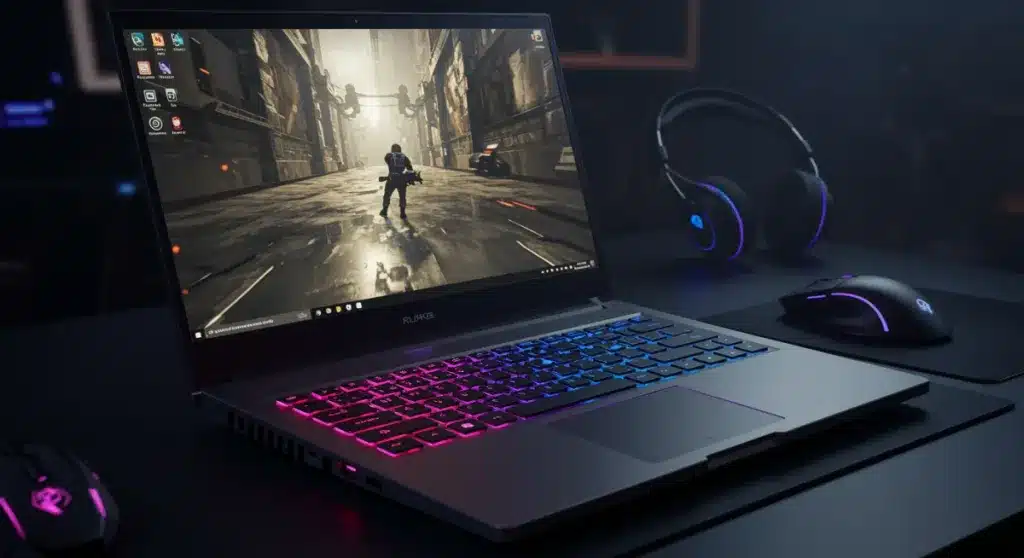
The landscape of portable gaming has changed dramatically over the past two decades. What once required a bulky desktop tower and a CRT monitor now fits comfortably in a backpack. The Evolution of Gaming Laptops: Performance and Portability represents one of the most fascinating technological journeys in consumer electronics, combining breakthroughs in graphics processing, thermal engineering, display technology, and power efficiency into increasingly elegant packages.
The Early Days: When Portability Meant Compromise
The first gaming laptops emerged in the late 1990s and early 2000s, and they were far from the sleek machines we know today. These early devices weighed anywhere from eight to fifteen pounds, making them more akin to portable workstations than gaming machines. The graphics capabilities were laughable by modern standards, often featuring integrated graphics that could barely handle games from several years prior.
During this era, the term “gaming laptop” was almost an oxymoron. Manufacturers attempted to cram desktop components into chassis designs that prioritized portability over performance, resulting in devices that overheated frequently, had abysmal battery life, and delivered gaming experiences far inferior to their desktop counterparts. The screens were typically small, low-resolution TN panels with poor color accuracy and limited viewing angles.
The market during this period was niche, catering primarily to business professionals who wanted to play the occasional game during travel and wealthy enthusiasts who prioritized mobility over pure performance. The technology simply had not advanced enough to bridge the gap between portable convenience and gaming capability.
Key Limitations of Early Gaming Laptops
- Extremely heavy chassis making true portability impractical
- Graphics cards years behind current desktop equivalents
- Battery life measured in hours rather than minutes of gaming
- Poor thermal management leading to throttling and hardware failures
- Low-quality displays with limited color gamut and refresh rates
Despite these limitations, these early machines established the foundation for what would become one of the most competitive segments in consumer electronics. Manufacturers learned valuable lessons about thermal management, power delivery, and user expectations that would inform future product development.
The GPU Revolution: Bringing Desktop Power to Your Lap
The turning point in gaming laptop history came with the development of dedicated mobile graphics processing units. NVIDIA and AMD recognized the potential market and began creating mobile-specific GPUs that balanced performance with power efficiency. The introduction of the NVIDIA GeForce Go series and later the AMD Mobility Radeon line marked the beginning of a new era.
These dedicated GPUs represented a quantum leap in capability. Suddenly, gaming laptops could handle contemporary titles at reasonable settings, though still not matching desktop performance. The architectural improvements allowed for better power management, enabling longer battery life while delivering substantially higher frame rates.
The evolution of GPU technology continued at an accelerating pace. Mobile GPUs that once lagged two or three generations behind their desktop counterparts began closing the gap. Today, top-tier gaming laptops feature graphics processors that are nearly identical to their desktop equivalents, with only slight clock speed reductions to manage thermal output.
This convergence has been particularly significant for the gaming industry. Esports professionals, content creators, and serious gamers now have viable alternatives to desktop setups without sacrificing meaningful performance. The ability to compete at tournaments, create content on the go, or enjoy AAA titles anywhere has transformed gaming laptop from a compromise choice to a legitimate primary gaming platform.
Mobile GPU Generations
- Early 2000s: Basic dedicated GPUs with limited VRAM
- Mid-2000s: Introduction of DirectX 10 support and unified shaders
- 2010s: Massive performance gains with Kepler and GCN architectures
- 2019-present: RTX series bringing real-time ray tracing to mobile
- Current era: Desktop-class GPUs in increasingly thin form factors
The GPU revolution fundamentally changed consumer expectations. Gamers no longer accepted “good enough for a laptop” as a qualifier. They demanded performance that could compete with desktop rigs, and manufacturers responded with increasingly ambitious designs.
Thermal Management: Taming the Heat
Perhaps no aspect of gaming laptop development has been more challenging than thermal management. Cramming high-performance components into confined spaces generates tremendous heat that must be dissipated efficiently to prevent performance throttling and hardware damage. The evolution of cooling solutions represents some of the most impressive engineering in consumer electronics.
Early approaches relied on simple heat sink and fan combinations that proved inadequate for sustained high-performance workloads. These systems were noisy, often failing to keep components within optimal temperature ranges during gaming sessions. The constant fan cycling became a distinctive (and annoying) characteristic of early gaming laptops.
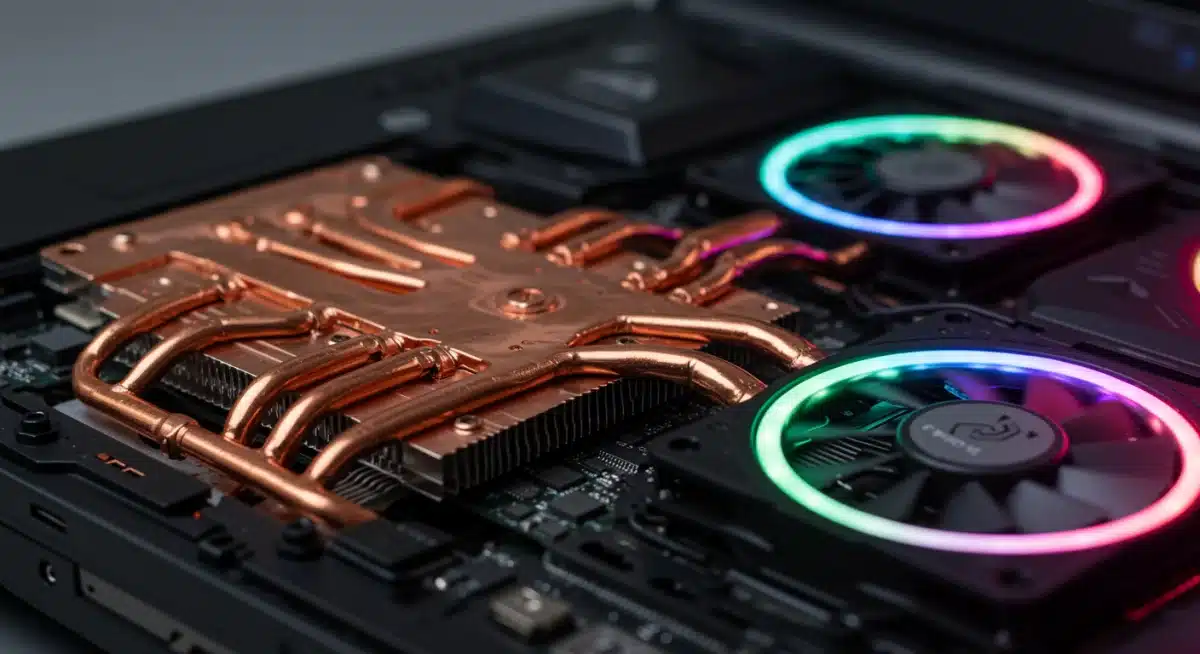
Modern gaming laptops employ sophisticated multi-zone cooling systems featuring vapor chamber technology, multiple heat pipes, and high-volume fans with advanced blade designs. Some premium models incorporate liquid metal thermal interfaces and dedicated GPU cooling zones that were previously impossible in portable form factors.
The results have been remarkable. Contemporary gaming laptops can sustain boost clock speeds for extended periods, maintain frame rate stability during lengthy gaming sessions, and do so while remaining noticeably quieter than their predecessors. This thermal efficiency has been essential in enabling the thin-and-light gaming laptop category that now dominates the market.
Cooling Technology Advances
- Vapor chamber cooling for uniform heat distribution
- Advanced heat pipe materials including copper and graphene
- Liquid metal thermal interface compounds
- AI-powered fan curve optimization
- Multi-zone cooling with dedicated airflow paths
Manufacturers have also embraced innovative chassis designs that prioritize airflow without sacrificing aesthetics. The “flow-through” keyboard designs, rear ventilation exhausts, and bottom intake grills have become standard features that balance thermal performance with the sleek appearance consumers demand.
Display Technology: Beyond the Pixel
Gaming laptop displays have undergone a transformation as dramatic as the internal components. The small, dim, poor-quality TN panels of the past have given way to high-resolution IPS and OLED displays with exceptional color accuracy, high refresh rates, and advanced HDR capabilities.
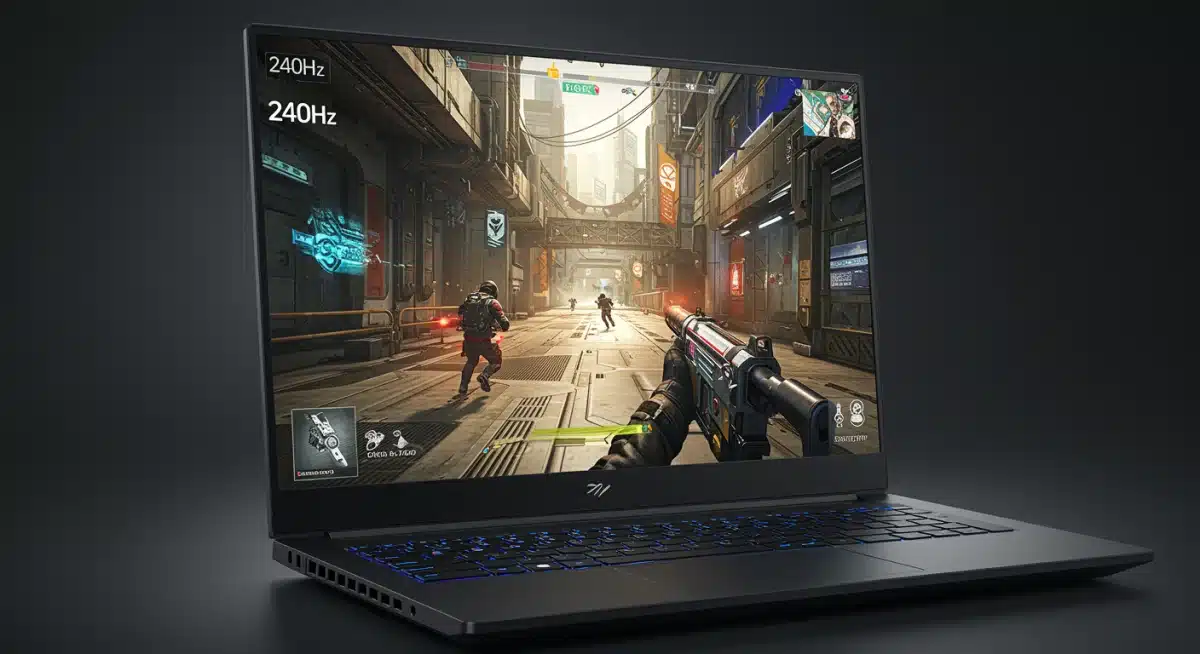
The introduction of high refresh rate panels represents one of the most impactful improvements for competitive gamers. What started at 60Hz quickly evolved to 120Hz, then 144Hz, and now reaches an astonishing 360Hz on select models. These higher refresh rates deliver visibly smoother motion and reduced input lag, providing meaningful competitive advantages in fast-paced games.
Resolution has similarly advanced dramatically. Full HD displays have given way to QHD (1440p) and even 4K options on gaming laptops, with some models now featuring mini-LED and OLED technology that rivals the best consumer televisions. The color accuracy improvements have made gaming laptops viable for professional content creation, not just gaming.
HDR (High Dynamic Range) support has become increasingly common, with displays capable of displaying wider color gamuts and higher peak brightness levels. This technology brings games to life in ways that SDR displays simply cannot match, with more detail in shadows and highlights and more vibrant, lifelike colors.
Display Specification Evolution
- Resolution: From 1024×768 to 4K UHD and beyond
- Refresh rates: 60Hz standard to 360Hz for esports
- Panel types: TN to IPS to OLED technology
- Response times: 25ms to 1ms gray-to-gray
- Color accuracy: Basic sRGB to 100% DCI-P3 coverage
The integration of adaptive sync technologies like NVIDIA G-Sync and AMD FreeSync has further enhanced the gaming experience by eliminating screen tearing and stuttering. These features, once exclusive to desktop monitors, are now standard on gaming laptop displays.
Battery Life: Breaking Free from the Cord
Battery life has historically been the Achilles heel of gaming laptops. The high power demands of dedicated graphics processors meant that early gaming laptops could barely sustain an hour of gameplay away from an outlet. This limitation fundamentally undermined the portability promise that made gaming laptops attractive in the first place.
The evolution of battery technology, combined with more efficient GPU architectures and advanced power management, has dramatically extended usable runtime. Modern gaming laptops routinely achieve four to eight hours of battery life for general productivity tasks, with some models even offering extended battery options that can last an entire work day.
Perhaps more significantly, the introduction of advanced power switching technologies allows gaming laptops to seamlessly transition between discrete GPU mode for gaming and integrated graphics for everyday tasks. This optimization preserves battery life during non-gaming activities while delivering full performance when needed.
Fast charging capabilities have also improved dramatically. What once required hours to fully recharge can now be accomplished in under an hour on many models, thanks to higher wattage charging adapters and improved battery chemistry. Some manufacturers have even adopted USB-C Power Delivery standards, allowing users to charge their laptops with compatible chargers from other devices.
Battery and Power Improvements
- Battery capacity: From 30Wh to 99Wh in premium models
- Charging speed: Standard to 300W+ fast charging
- Power delivery: Dedicated to USB-C PD compatibility
- Hybrid graphics: Automatic GPU switching technology
- Optimized power profiles: Balance performance and efficiency
The practical implication of these improvements cannot be overstated. Gamers can now work productively on their gaming laptops throughout a workday, then game at full performance in the evening without anxiety about finding an outlet. This shift from “emergency backup” to “legitimate primary device” has expanded the addressable market substantially.
The Modern Gaming Laptop: A Complete Package
Today’s gaming laptops represent the culmination of decades of engineering advancement. Modern devices combine desktop-class performance, excellent battery life, premium displays, sophisticated cooling systems, and refined industrial design into packages that would have seemed impossible just a decade ago.
The premium segment has seen particularly impressive evolution. Machines like the Razer Blade, ASUS ROG Zephyrus, and MSI Stealth series demonstrate that gaming laptops can be genuinely stylish without sacrificing performance. The thin-and-light gaming laptop category has grown from a novelty to a major market segment, with devices as thin as 16mm capable of delivering performance that would have required a massive desktop tower in years past.
Input devices have received similar attention. Mechanical keyboards with per-key RGB lighting, precision touchpads with Windows Precision drivers, and even touchscreen options have become common features. Audio systems have improved dramatically, with some gaming laptops featuring speakers that rival dedicated external solutions.
Connectivity options have expanded to include the latest standards, including Wi-Fi 6E, Thunderbolt 4, USB4, and high-speed SD card readers. These comprehensive I/O options eliminate the need for dongles and adapters that previously complicated the portable gaming experience.
Modern Gaming Laptop Features
- Processors: Up to 24-core CPUs matching desktop performance
- Memory: Up to 64GB DDR5 in dual-channel configurations
- Storage: Multiple NVMe slots with PCIe 4.0/5.0 support
- Build quality: Premium aluminum unibody construction
- Software: Comprehensive control centers and RGB ecosystems
The software ecosystem surrounding gaming laptops has matured considerably as well. Manufacturer control panels provide intuitive access to performance tuning, fan curves, RGB lighting, and macro programming. Integration with streaming platforms, game launchers, and broadcasting tools has made content creation more accessible than ever.
What Lies Ahead: Future Innovations
The evolution of gaming laptops shows no signs of slowing. Several emerging technologies promise to further blur the line between desktop and portable gaming while introducing entirely new capabilities that could reshape the category.
Display technology continues to advance, with microLED and quantum dot OLED panels poised to deliver even better image quality. Higher refresh rates beyond 360Hz and 4K resolution at refresh rates that rival current 1080p displays will further enhance visual fidelity and responsiveness.
Artificial intelligence integration represents another frontier. AI-assisted upscaling technologies like NVIDIA’s DLSS and AMD’s FSR are already transforming performance in supported games, and this technology will only become more sophisticated. Future gaming laptops may leverage AI for everything from adaptive performance tuning to intelligent battery optimization.
Processor architectures continue evolving, with ARM-based solutions potentially entering the gaming laptop space in meaningful ways. These processors could deliver unprecedented battery life while approaching x86 performance levels through sophisticated translation layers.
Emerging Technologies
- MicroLED displays: Superior brightness and longevity
- AI upscaling: Enhanced performance through intelligent rendering
- ARM processors: Potential for unprecedented efficiency
- Cloud gaming integration: Seamless streaming capabilities
- Advanced materials: Lighter, stronger chassis construction
The convergence of these technologies suggests that future gaming laptops will be even more capable, portable, and versatile than current models. The dream of a truly desktop-class portable gaming experience is closer to reality than ever before, and the pace of innovation shows no signs of slowing.
| Era | Key Advancements |
|---|---|
| Early 2000s | First dedicated mobile GPUs, basic cooling solutions, heavy chassis designs |
| 2010s | Unified shader architectures, improved thermal management, high refresh rate displays |
| 2019-Present | RTX graphics, vapor chamber cooling, OLED displays, thin-and-light premium designs |
| Future | MicroLED displays, AI upscaling, ARM processors, cloud gaming integration |
Frequently Asked Questions
Most gaming laptops remain functional for 4-6 years with proper care, though performance expectations change over time. Components like batteries degrade naturally, and newer game requirements may strain older hardware. Premium models with better thermal management tend to have longer service lives than budget options.
Upgradability varies by model. Most gaming laptops allow RAM and storage upgrades, while some premium models even support GPU swaps. However, CPU and GPU are typically soldered to the motherboard in modern thin designs. Always check specifications before purchasing if upgradability is important to you.
Modern gaming laptops include sophisticated thermal management systems that prevent dangerous overheating. Some thermal throttling may occur under extreme loads, but this is a protective mechanism rather than a failure. Premium models with advanced cooling solutions maintain lower temperatures and higher sustained performance.
Absolutely. Gaming laptops typically feature powerful processors, ample memory, and high-quality displays that excel at productivity work, content creation, and media consumption. The premium build quality and keyboard comfort often surpass standard business laptops, making them excellent all-around devices.
Prioritize the GPU for gaming performance, ensure adequate RAM (16GB minimum), and consider display refresh rate and resolution. Thermal management quality matters for sustained performance, while battery life affects portability. Also consider build quality, keyboard comfort, and port selection based on your specific needs.
Conclusion
The evolution of gaming laptops from bulkycompromises to sophisticated powerhouses represents one of the most remarkable technological journeys in consumer electronics. Today’s devices deliver experiences that would have seemed impossible two decades ago, combining desktop-class performance with genuine portability. As technology continues advancing, gaming laptops will likely become the primary gaming platform for an increasing number of users, further blurring the distinction between desktop and portable gaming while opening entirely new possibilities for how, where, and when we play.
