
How peel and stick wallpaper works on textured walls
Ads
Peel and stick wallpaper generally struggles to adhere to textured walls because the adhesive requires a flat, uniform surface to create an airtight bond. This self-adhesive product offers a convenient decorating option for renters and homeowners, but surface irregularities like orange peel, knockdown, or plaster can cause edges to lift, air pockets to form, and textures to show through thin vinyl.
Ads
Understanding how pressure-sensitive adhesives interact with uneven drywall helps prevent wasted materials and wall damage. Before ordering rolls for an accent wall, assessing the texture level and exploring preparation techniques can save both time and money.
Ads
Why adhesive vinyl struggles on uneven surfaces
Self-adhesive wallpapers rely on pressure-sensitive adhesives (PSA) that require continuous surface contact to achieve their full bonding strength. When applied to flat drywall, the adhesive makes contact across the entire backing. On a textured wall, the paper only touches the raised peaks of the texture, leaving tiny air pockets in the recessed valleys.
Because the actual surface contact area is significantly reduced, the weight of the vinyl sheet eventually pulls the material away from the wall. Over time, changes in room temperature and humidity cause the vinyl to expand and contract, which accelerates lifting along the seams and corners. Additionally, thin peel and stick vinyl tends to conform to surface bumps over time, creating a lumpy, uneven visual finish under direct lighting.
Assessing your wall texture before hanging paper
Not all wall textures present the same level of difficulty for removable wallpaper. Light textures with shallow variations may hold low-tack adhesives temporarily, whereas heavy or sharp textures almost always lead to adhesive failure.
Common texture types and adhesion risks
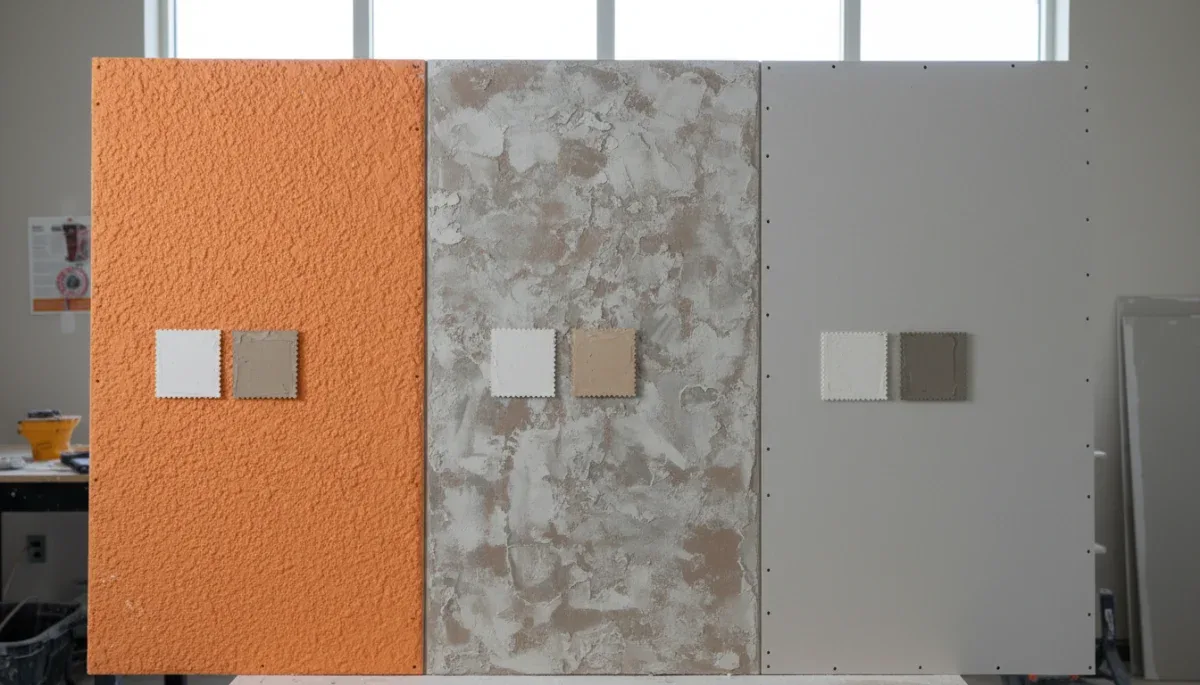
- Light orange peel: Features small, rounded bumps with minimal depth. Low adhesion risk for thicker vinyl, but samples should always be tested first.
- Knockdown texture: Consists of flattened joint compound plateaus with wide valleys. High adhesion risk due to broad air gaps beneath the paper.
- Popcorn or heavy acoustic: Contains large, brittle aggregates. Severe adhesion risk that will cause immediate peeling and potential drywall damage.
- Sand swirl or plaster: Characterized by fine, abrasive ridges. Moderate to high risk of premature adhesive release.
Methods to smooth walls for temporary wallpaper
To ensure long-term adhesion without visible bumps, creating a smooth substrate is the standard approach. Homeowners who own their property have permanent options, while renters must rely on non-destructive alternatives.
The most permanent method is applying a skim coat of drywall joint compound across the entire wall. Using a wide drywall knife, compound is spread thin to fill the low spots, allowed to dry, and lightly sanded smooth. Once primed with a universal wall primer, the surface provides the flat contact area needed for peel and stick wallpaper to hold securely.
Steps for preparing rough drywall
- Sand down high, sharp ridges with medium-grit sandpaper to reduce surface depth.
- Apply a thin skim coat of all-purpose joint compound across the low areas.
- Allow the compound to cure completely, then sand lightly with fine-grit sandpaper.
- Wipe away all sanding dust using a damp microfiber cloth.
- Seal the surface with a quality acrylic or wallpaper primer before installation.
Renter-friendly workarounds that avoid permanent changes
Renters typically cannot sand or skim coat walls without risking their security deposits. In these situations, alternative mounting techniques allow the use of decorative patterns without direct application to heavy texture.
One common solution involves applying heavy-duty, removable wallpaper liner specifically engineered to bridge texture gaps. These thick non-woven liners stick securely across moderate textures and create a uniform top layer. Another workaround is mounting the peel and stick wallpaper onto lightweight hardboard, foam core, or thin plywood panels, which are then hung on the wall using standard picture-hanging hardware.
Best practices for testing and hanging removable panels
Before purchasing multiple rolls of self-adhesive paper, order a sample swatch from the manufacturer. Clean a small test section of your wall with a solution of 70 percent isopropyl alcohol and water to remove oils and household dust that reduce stickiness.
Key installation steps for tricky surfaces
- Apply the test swatch in an inconspicuous area and leave it in place for at least 48 hours.
- Check the sample daily for lifting edges or significant pattern distortion over bumps.
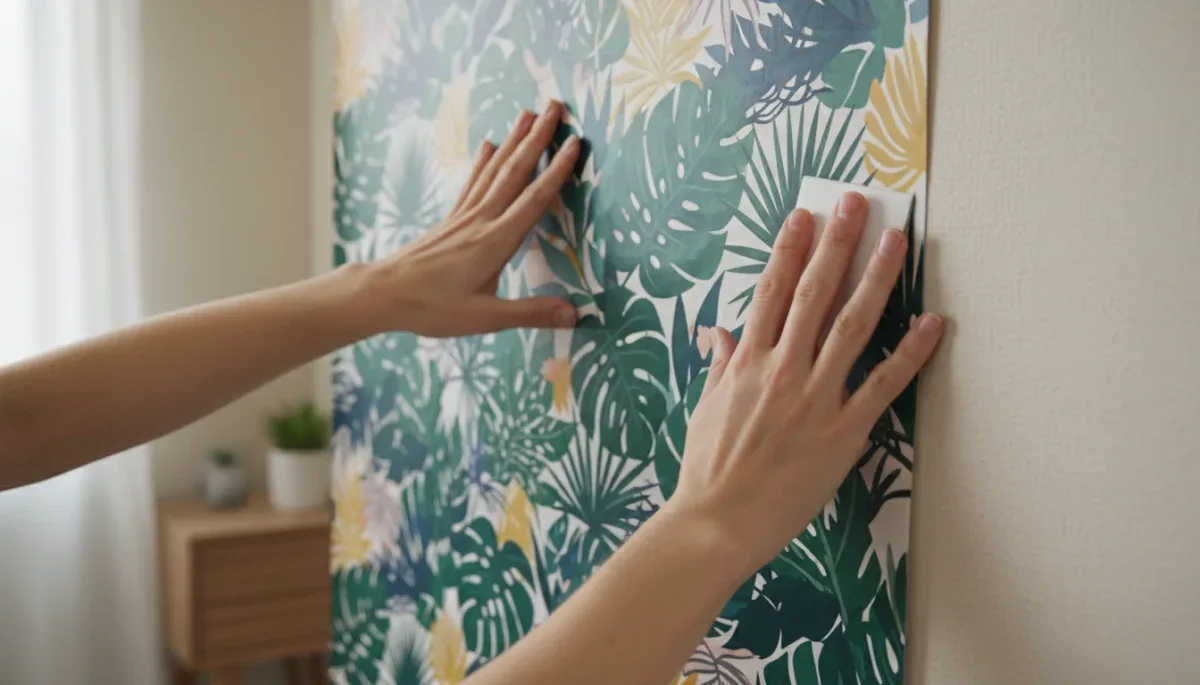
- Use a felt-edged squeegee during full installation to press vinyl firmly into shallow valleys without scratching the print.
- Avoid stretching the material while aligning seams, as stretched vinyl shrinks back and lifts at the edges.
At a glance
| Factor | What to know |
|---|---|
| Surface contact | Reduced contact area on bumps causes wallpaper to peel over time. |
| Visual appearance | Thin vinyl conforms to wall bumps, highlighting texture underneath. |
| Best prep method | Skim coating and priming provides the highest success rate on rough walls. |
| Renter solutions | Thick bridging liners or mounted hardboard panels avoid drywall alteration. |
Frequently asked questions
Can peel and stick wallpaper damage textured walls when removed?
Yes, removing adhesive paper from textured walls can pull off loose drywall compound or paint from the raised peaks. Because the adhesive grips unevenly, pulling too fast can tear the surface finish rather than releasing cleanly.
Does extra glue help peel and stick wallpaper stick to texture?
Adding liquid wallpaper paste or spray adhesive can improve grip, but it removes the temporary, damage-free benefit of peel and stick products. Extra adhesives often make removal difficult and can leave stubborn residue on the textured paint.
How long does removable wallpaper last on orange peel walls?
Removable wallpaper may stay attached to fine orange peel walls for several months to a few years if properly cleaned and primed. However, rooms with fluctuating humidity, like bathrooms, experience much faster edge peeling.
Will wallpaper primer fix adhesion problems on rough walls?
Primer improves chemical bonding to the paint, but it cannot fix physical gaps caused by deep texture. A primer ensures the adhesive grips the paint firmly, but the surface must still be relatively flat to prevent falling.
The bottom line
Peel and stick wallpaper is designed primarily for flat surfaces, and applying it directly to medium or heavy textures often results in peeling corners, trapped air pockets, and uneven patterns. While light orange peel finishes may hold thick vinyl temporary paper, heavy knockdown or plaster textures require smoothing through skim coating or mounting to separate panels. Before buying full rolls, order a sample swatch to test the adhesive strength on your specific wall finish.
Written by
Maria Eduarda
Maria Eduarda writes about fashion & beauty for netysphere.com. Each article explains how things work, compares published details such as prices, policies and program rules, and points readers to the official source before they decide.