
Ads
Ads
Ads
Eye makeup has the power to transform your entire appearance in minutes. Whether you’re perfecting a subtle everyday look or experimenting with bold colors that turn heads, understanding the fundamentals opens endless possibilities. This guide walks you through every stage, from building your toolkit to executing confidence-boosting looks that reflect your personal style.
Essential Tools and Products for Eye Makeup
Every stunning eye look starts with the right equipment. Investing in quality tools doesn’t mean breaking the bank, but it does mean understanding what each piece does and how it contributes to your final result.
The backbone of any eye makeup collection includes several key items. Quality matters more than quantity when building your kit, so focus on versatile products that serve multiple purposes.
Must-Have Brushes
- Flat shader brush for packing color onto the lid
- Blending brush for seamless transitions between shades
- Angled brush for precise eyeliner application and brow bone highlighting
- Spoolie brush for grooming eyebrows before and after makeup
Synthetic brushes typically perform better with cream and liquid products, while natural hair brushes work beautifully with powder formulas. Start with a basic set of five to six brushes and expand as your skills develop.
Core Products to Build Your Collection
- Neutral eyeshadow palette with matte and shimmer options
- Black or brown eyeliner (pencil and liquid for versatility)
- Lengthening or volumizing mascara (or both layered)
- Concealer one shade lighter than your skin for highlighting
- Eyebrow product matching your hair color
These basics cover 90% of looks you’ll want to create. As you explore different styles, you can add colored eyeliners, glitter toppers, and specialty shadows to expand your repertoire.
Quality tools make application smoother and results more professional. Dull brushes pull at delicate eye skin and create patchy color deposit, so replace your tools regularly or keep them clean and in good condition.
Mastering Basic Eye Makeup Techniques
Before attempting bold looks, building solid fundamentals pays dividends. The basic eye makeup routine creates a polished appearance suitable for work, casual outings, or everyday wear. Once you master these techniques, transitioning to more dramatic styles becomes natural.
Start with a clean canvas. Cleanse moisturized skin allows makeup to apply smoothly and last longer. Prime your eyelids with a dedicated eyeshadow primer or a tiny amount of concealer set with powder to prevent creasing and help colors pop.
The Three-Step Shadow Formula
- Apply lightest shade across the entire lid up to the brow bone
- Use medium shade in the crease and blend upward for depth
- Add darkest shade along the outer corner and blend toward the center
This layering technique works regardless of eye shape and creates dimension naturally. The key lies in blending thoroughly to eliminate harsh lines. Use a clean blending brush and small circular motions to merge colors seamlessly.
Eyeliner application requires practice and patience. Start with a pencil liner as it allows more control and is forgiving for beginners. Begin at the outer corner and work inward, staying as close to the lash line as possible. For a subtle effect, skip the inner waterline and focus on the upper lash line only.
Mascara completes every eye look. Curl lashes before applying to open the eye and create a more awake appearance. Wiggle the wand from roots to tips while building volume. For mascara that needs to last all day, look for formulas labeled long-wearing and avoid water-based options if you’re prone to watery eyes.
These fundamentals create a reliable everyday look that takes approximately five to ten minutes once practiced. Consistency builds muscle memory, making each application faster and more precise.
Understanding Eye Shapes and Customizing Your Look
Not every technique works equally well for every eye shape. Understanding your unique eye structure helps you choose flattering colors and application methods that enhance your natural features rather than fighting against them.
Common eye shapes include almond, round, hooded, monolid, and deep-set. Each has distinct characteristics that respond differently to various makeup approaches.
Adapting Techniques to Your Eye Shape
- Almond eyes suit most eyeshadow placements and winged liner beautifully
- Round eyes benefit from extending liner past the outer corner to create elongation
- Hooded eyes require placement above the crease rather than on the mobile lid
- Monolid eyes shine with gradient shading and bold color blocking
- Deep-set eyes look stunning with shimmer on the brow bone and matte in the crease
Identifying your eye shape takes honest self-assessment. Look straight ahead at a mirror and observe the visible portion of your iris relative to your eyelid. Take photos from different angles to see your eye structure more objectively.
Once you understand your eye shape, customizing your approach becomes straightforward. The same eyeshadow palette can look entirely different depending on where you place each shade. Experiment within your comfort zone, noting what flatters your specific features.
Don’t feel constrained by rules meant for different eye shapes. These guidelines serve as starting points, not absolute laws. Your personal style and comfort level ultimately determine what looks best on you.
Building Confidence with Intermediate Eye Looks
Once basic techniques feel comfortable, intermediate looks offer exciting opportunities to express creativity without overwhelming your face. These styles incorporate more color, dimension, or precision while remaining appropriate for various occasions.
Smoky eyes represent the quintessential intermediate look. The technique involves blending dark colors from the lash line upward, creating a soft gradient that mimics smoke. While traditionally executed in blacks and grays, smoky eyes work beautifully with browns, navies, or even jewel tones.
Creating a Perfect Smoky Eye
- Prime eyelids thoroughly to ensure blendable color
- Apply dark shade along upper and lower lash lines
- Blend upward using windshield wiper motions
- Layer medium shade to soften edges and build depth
- Add highlight shade on brow bone and inner corner
- Complete with winged liner and multiple mascara coats
The secret to a sophisticated smoky eye lies in blending. Harsh lines signal amateur application, while seamless gradients read as intentional and polished. Take your time with each step and resist the urge to rush.
Color experimentation becomes more accessible at this stage. Try incorporating a single pop of color into neutral looks, or experiment with complementary shades that enhance your eye color. Blue eyes pop with orange and copper tones, while brown eyes glow with purple and green shadows.
Intermediate looks also introduce more precise eyeliner styles, including the cat-eye, tightlining, and floating crease designs. Each requires practice but offers distinctive results that elevate your makeup game significantly.
Bold Eye Makeup: Breaking the Rules
Bold eye makeup isn’t about looking inappropriate or overdone. It’s about confidence, self-expression, and stepping outside your comfort zone to discover new aspects of your personal style. These looks command attention and celebrate individuality.
The transition from intermediate to bold doesn’t require dramatic changes overnight. Small shifts in color intensity, placement, or technique accumulate into statements. Adding a bright colored liner, experimenting with graphic shapes, or incorporating glitter creates immediate impact.
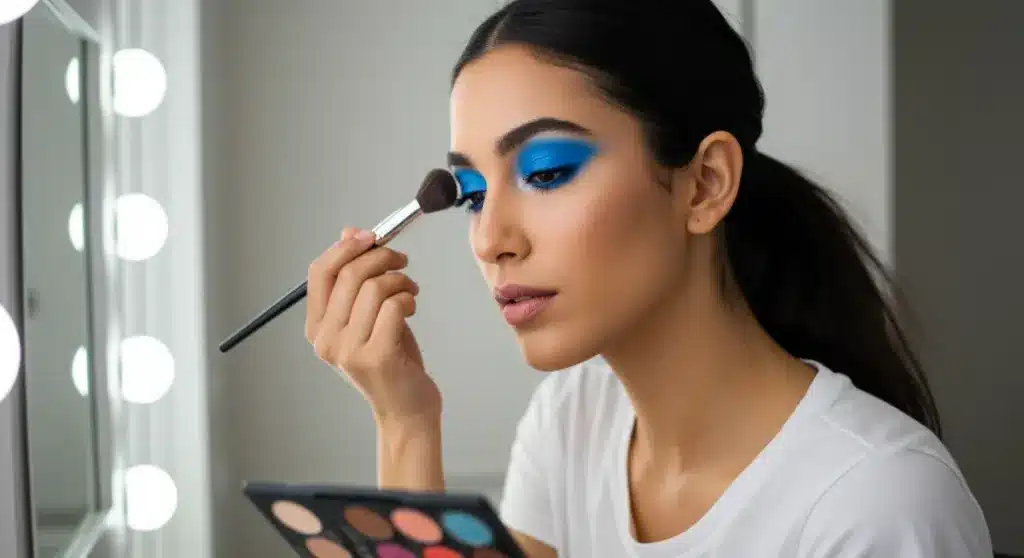
Color choice drives bold looks more than technique alone. Vibrant hues like electric blue, hot pink, and neon green transform basic application into head-turning statements. These colors work best when concentrated in specific areas rather than spread across the entire lid.
Elements That Make Eye Makeup Bold
- High-contrast colors not typically found in natural looks
- Unconventional placement extending beyond traditional boundaries
- Graphic shapes including floating eyeliner or cut creases
- Textures like glitter, shimmer, or metallic finishes
- Dramatic false lashes or layered mascara
Bold looks suit special occasions, nights out, photoshoots, or any setting where you want to make a statement. They also work beautifully for creative expression, fashion events, or when you’re simply in the mood to be daring.
Confidence matters more than perfection with bold makeup. Slight asymmetries or unexpected color choices often create more interesting results than textbook-perfect application. Embrace experimentation and allow yourself creative freedom.
Building bold makeup courage takes time. Start by wearing slightly more dramatic looks in low-stakes situations, gradually pushing boundaries as comfort increases. Each experiment teaches you what works for your face and personal style.
Pro Tips for Long-Lasting Eye Makeup
Nothing ruins a great look faster than makeup that fades, creases, or migrates throughout the day. Understanding the factors that affect longevity helps you create eye makeup that stays fresh from morning until night.
Skincare and preparation directly impact how makeup performs. Oily eyelids cause eyeshadow to crease and slide, while dry skin creates flaky texture. Balance your skincare routine to your skin type before applying makeup.
Secrets to All-Day Eye Makeup Wear
- Apply eyeshadow primer before every look
- Set liquid concealer or primer with translucent powder
- Use cream shadows as bases for powder formulas
- Tap off excess product from brushes before application
- Blend with a light hand to avoid friction that breaks down products
- Carry blotting papers to absorb excess oil without disturbing makeup
Environmental factors affect makeup longevity. Humidity, heat, and physical activity accelerate breakdown. Waterproof formulas resist moisture but require more thorough removal at the end of the day.
Setting spray provides an invisible shield that locks everything in place. A few spritzes after completing your look significantly extend wear time while preventing smudges from transferring to clothing or glasses.
Touch-up strategies matter too. Keep a small bag with essential supplies including concealer, powder, and a travel-sized mascara for quick refreshes. Address issues immediately rather than allowing them to compound throughout the day.
Removing Eye Makeup: The Essential Final Step
Successful eye makeup extends beyond application. Proper removal prevents long-term damage to delicate eye area skin and maintains lash health. This step deserves as much attention as your application routine.
Eye makeup removers come in various formulations including micellar water, oil-based removers, balms, and dedicated eye makeup removers. Oil-based options effectively break down waterproof mascara and long-wearing formulas that water-based products struggle to dissolve.
Effective Eye Makeup Removal Steps
- Saturate cotton pads with remover and hold against closed eyes for 30 seconds
- Gently swipe downward to remove eyeshadow and liner
- Use fresh cotton pads for each eye to prevent cross-contamination
- Work along lash line with q-tips for residual mascara
- Rinse with lukewarm water and follow with gentle cleanser
- Apply moisturizer or eye cream before bed
Rubbing aggressively damages delicate skin and causes premature wrinkles. Be patient and let the remover do the work. Persistent mascara may require a second application rather than aggressive scrubbing.
Lash care deserves attention during removal. Pulling at lashes weakens them over time and can cause premature lash loss. Treat your lashes gently and consider conditioning treatments to maintain their health and strength.
Never sleep with eye makeup intact. Sleeping with makeup traps bacteria against your skin, potentially causing infections, styes, or allergic reactions. Make removal a non-negotiable part of your evening routine regardless of how tired you feel.
| Key Point | Brief Description |
|---|---|
| Essential Tools | Quality brushes, neutral palettes, eyeliner, and mascara form the foundation for any eye look. |
| Basic Techniques | Master the three-step shadow formula, proper blending, and precise liner application for everyday wear. |
| Eye Shape Awareness | Customize application based on your unique eye shape for most flattering results. |
| Bold Expression | Experiment with vibrant colors, graphic shapes, and textures to create statement-making looks. |
Frequently Asked Questions About Eye Makeup
Powder eyeshadows offer the easiest learning curve for beginners because they blend smoothly and allow for mistake correction. Look for highly pigmented powder formulas in matte and satin finishes. These blend easily and build gradually, preventing the over-application that often discourages new makeup wearers.
Primer application solves creasing issues in most cases. Apply a dedicated eyeshadow primer or use concealer set with translucent powder before adding color. This creates a smooth base that locks shadow in place and prevents oils from breaking down the formula. Oil control throughout the day also helps maintain crease-free results.
Glasses can diminish eye visibility, so adding dimension helps your eyes stand out. Define your brows clearly and apply mascara to lashes that may get hidden behind lenses. Consider tightening your liner to stay above glasses frames, and use slightly bolder colors to ensure your eyes remain visible through lenses.
Mascara should be replaced every three months as it harbors bacteria near the eye area. Liquid eyeliners last six months to one year, while pencil eyeliners remain fresh for up to two years. Eyeshadows last two to three years when properly stored. Prioritize replacing products that have changed in texture, smell, or color.
Lipstick can work as cream eyeshadow in emergencies, though it’s not ideal. The formulations differ, and lip products may contain ingredients that irritate sensitive eye skin. If using lipstick on eyes, apply sparingly and avoid the waterline. Remove carefully at the end of the day and monitor for any irritation or allergic reactions.
Conclusion
Eye makeup mastery unfolds through practice, patience, and willingness to experiment. Starting with fundamental techniques builds confidence that propels you toward more creative expression. Whether you prefer subtle enhancement or bold statements, the skills developed through this guide serve as a foundation for endless possibilities. Remember that trends change but technique remains永恒. Focus on understanding why certain approaches work for your features, and you’ll adapt effortlessly as new products and styles emerge. Your eyes deserve the attention and care that beautiful makeup provides.
