
How to read laundry care symbols and wash delicate fabrics
Ads
Standardized laundry care symbols communicate the precise temperature, cycle intensity, drying method, and chemical restrictions required to maintain a garment without damaging its structural fibers. Learning to read these icons protects fine textiles from shrinkage, fiber breakage, and dye bleeding during regular cleaning routines.
Ads
This reference helps anyone caring for everyday garments, fine knitwear, or structured pieces, though the primary challenge involves balancing manufacturer instructions against the real-world behavior of delicate fabrics like silk, wool, and rayon.
Ads
The five core laundry symbol categories
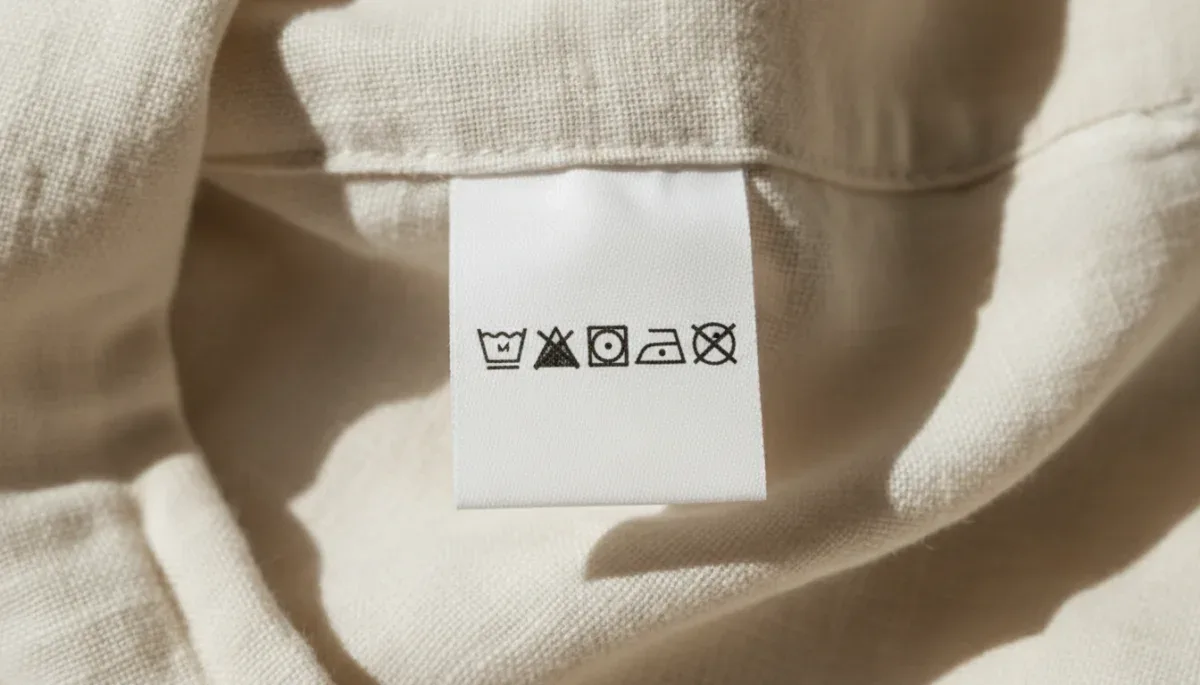
International garment labeling standards, maintained by the International Organization for Standardization and the Federal Trade Commission in the United States, use a basic five-symbol system. Each primary shape represents a distinct stage in the garment maintenance process. Understanding the baseline shapes allows you to determine the broad category of care required before checking the modifiers that dictate temperature and agitation levels.
Every garment tag displays these icons in a consistent sequence to guide the cleaning process from start to finish. Recognizing the base geometry prevents costly laundering mistakes.
Primary symbol definitions
- Washtub: Dictates the water washing process, including water temperature, machine cycle, and hand-washing requirements.
- Triangle: Indicates bleaching allowances, clarifying whether chlorine, non-chlorine, or no bleach may be used.
- Square: Outlines drying instructions, separating tumble drying from natural air drying techniques like line or flat drying.
- Iron: Specifies ironing temperature settings and whether steam application is permitted on the textile.
- Circle: Represents professional textile care, including dry cleaning specifications and wet cleaning limitations.
Decoding washing and temperature icons
The washtub icon provides specific details through two modifying elements: dots and horizontal bars. Dots placed inside the washtub indicate maximum water temperature. One dot represents cold water washing at 30 degrees Celsius or 85 degrees Fahrenheit. Two dots indicate warm water at 40 degrees Celsius or 105 degrees Fahrenheit. Three dots signify hot water at 50 degrees Celsius or 120 degrees Fahrenheit. Higher dot counts continue up to six dots, which corresponds to 95 degrees Celsius or 200 degrees Fahrenheit for heavy-duty boiling washes.
Bars positioned beneath the washtub indicate the mechanical agitation level recommended for the fabric. A washtub with no underline indicates normal machine agitation for sturdy materials like cotton. A single bar beneath the tub indicates a permanent press or mild cycle, which reduces spin speeds to prevent creasing. Two bars indicate a gentle or delicate cycle with minimal agitation. A washtub with a hand submerged inside means the item requires manual washing, while an icon crossed out with an X indicates the item should not be washed in water.
Understanding drying and bleaching markings
Drying symbols use a square shape, which adapts to show either tumble drying or natural drying methods. A square with an internal circle represents tumble drying. Just like washing icons, dots inside the circle represent heat levels: one dot for low heat, two for medium heat, and three for high heat. Horizontal lines underneath the drying square indicate gentle or delicate tumble cycles. A crossed-out tumble dry symbol warns that machine drying will cause shrinkage, melting, or severe fabric degradation.
Natural air drying icons use lines inside the plain square. A single vertical line inside the square means line drying, where the garment can hang freely. A curved line draped from the top corners means drip drying on a hanger while wet. A single horizontal line across the middle means flat drying, which is essential for heavy knits that stretch out of shape when hung. Three vertical lines indicate drip drying without spin extraction. Two diagonal lines in the corner of any drying square indicate the garment must dry in the shade to prevent solar fading.
Bleach instructions rely entirely on the triangle. A plain, empty triangle permits the use of any commercial bleach product, including chlorine bleach. A triangle filled with diagonal stripes allows only non-chlorine, oxygen-based bleach formulations. A solid triangle crossed out with an X, or an outlined triangle crossed out with an X, prohibits all bleaching agents entirely.
How to wash silk, wool, and synthetic delicates
Delicate textiles possess unique physical properties that react poorly to standard detergent formulas, warm temperatures, and vigorous agitation. Animal protein fibers such as silk, cashmere, and merino wool contain natural protein structures that break down when exposed to high-pH alkaline detergents or aggressive spinning. Cellulose and synthetic delicates, such as rayon, modal, and lace, lose substantial tensile strength when saturated with water, making them prone to tearing and dimensional distortion.
Silk requires cold water and a pH-neutral liquid detergent formulated specifically for delicates. Never soak silk for extended periods, as prolonged water submersion can weaken fibers and dull the natural luster. Wool and cashmere require specialized wool washes containing lanolin-friendly cleansers. These garments should never be exposed to friction or rapid water temperature shifts, which cause the microscopic scales on animal hairs to interlock and create permanent shrinkage known as felting.
Rayon and viscose fabrics require gentle handling because their wet strength is significantly lower than their dry strength. Wash these garments inside a fine mesh laundry bag using a delicate setting with cold water, or wash them gently by hand. Avoid twisting or wringing synthetic lace and sheer mesh, as the open-weave patterns can snag, distort, or rip under tension.
Best practices for hand washing and machine delicate cycles
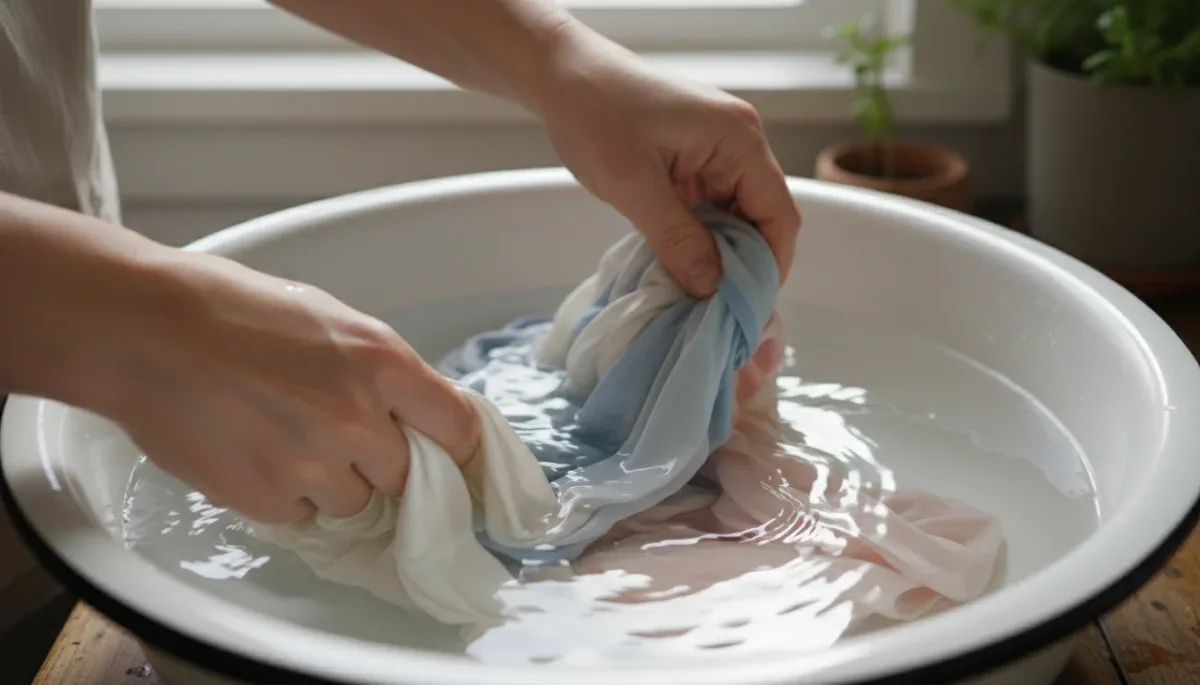
Hand washing provides the highest level of control for sensitive textiles. Begin by cleaning and rinsing a basin thoroughly to eliminate residual household cleaners. Fill the basin with cool water, add a measured dose of mild liquid detergent, and mix the solution completely before introducing the garment. Submerge the item and gently swirl it through the soapy water for two to three minutes without scrubbing or pulling the seams.
To rinse hand-washed items, drain the basin and refill it with clean, cold water, pressing the garment gently against the bottom of the basin until the water runs clear of soap suds. Never wring or twist delicate fabrics to remove excess moisture. Instead, lay the wet garment flat on a clean, dry towel, roll the towel up with the garment inside like a cylinder, and press down evenly along the roll to absorb excess water. Unroll the towel and transfer the garment to a flat drying rack away from direct heat sources and sunlight.
When using a modern washing machine for delicate loads, place each garment inside a zip-closed mesh laundry bag to prevent friction against the drum and entanglement with other items. Select the delicate or hand-wash cycle, ensure the water temperature is set to cold, and adjust the spin cycle to the lowest available revolutions per minute. Remove items promptly when the cycle finishes to prevent set-in wrinkles and mildew.
At a glance
| Symbol or factor | What to know |
|---|---|
| Dots inside icons | Represent allowable temperature levels for washing, drying, and ironing settings. |
| Underline bars | Indicate machine agitation limits, where more bars require gentler mechanical action. |
| Hand in washtub | Requires manual cleaning in cold water without machine agitation or high-speed spinning. |
| Circle shapes | Direct the user toward professional dry cleaning methods and solvent specifications. |
Frequently asked questions
What happens if you machine wash an item labeled hand wash only?
Machine washing can cause mechanical damage, stretching, pilling, or fiber breakage due to friction against the drum and other garments. While some sturdy items may survive a gentle cycle in a mesh bag, delicate silks, structured garments, and loosely spun knits often suffer permanent damage.
What is the difference between dry clean and dry clean only?
A circle icon indicates the garment can be dry cleaned, but alternative gentle cleaning methods at home may be viable depending on the fiber content. When a label explicitly states dry clean only, the internal structure, lining, or dyes will likely degrade if exposed to water.
Why do delicate garments require cold water?
Cold water prevents thermal shock, fabric shrinkage, and dye transfer while preserving the structural integrity of natural protein and synthetic fibers. Heat weakens fragile fibers like silk, rayon, and elastane, causing loss of elasticity, shape distortion, and accelerated fabric wear over time.
How do you tell if a fabric can be ironed?
Check the iron symbol on the care tag to verify the maximum safe temperature setting based on the dots displayed. An iron with one dot allows low heat up to 110 degrees Celsius, two dots permit medium heat, and three dots allow high heat up to 200 degrees Celsius.
The bottom line
Understanding laundry care symbols eliminates guesswork and ensures that delicate garments retain their fit, texture, and color over many years of wear. By matching water temperature, agitation levels, and drying techniques to the precise needs of each fabric type, you prevent preventable damage like shrinkage and fiber tearing. Always check the physical care tag on the garment's inner seam before selecting your wash settings to verify specific cleaning restrictions.
Written by
Lucas Bastos
Lucas Bastos writes about home finds for netysphere.com. Each article explains how things work, compares published details such as prices, policies and program rules, and points readers to the official source before they decide.