
Blackout vs. Thermal Curtains for Room Insulation
Ads
Thermal curtains provide substantially better overall room insulation than standard blackout curtains because their design focuses on stopping conductive and convective heat transfer through specialized core layers. While both styles cover window glass, thermal draperies use high-density inner batting, foam cores, or vapor barriers engineered to reduce temperature exchange between indoor living spaces and outdoor air.
Ads
This comparison helps homeowners and apartment renters who want to stabilize interior room temperatures and manage utility expenses, though achieving true efficiency depends just as heavily on how closely the fabric seals against the window trim. Understanding how each curtain type operates allows you to match the right window covering to your specific climate and light-control priorities.
Ads
How thermal curtains insulate windows
Thermal curtains function primarily as thermal barriers by creating trapped dead-air space between the window pane and the living room. Windows represent one of the primary points of heat loss in winter and heat gain in summer, and standard glass conducts outdoor temperatures directly into your home. Thermal drapes counter this movement by combining multiple bonded textile layers that slow the rate of thermal conduction.
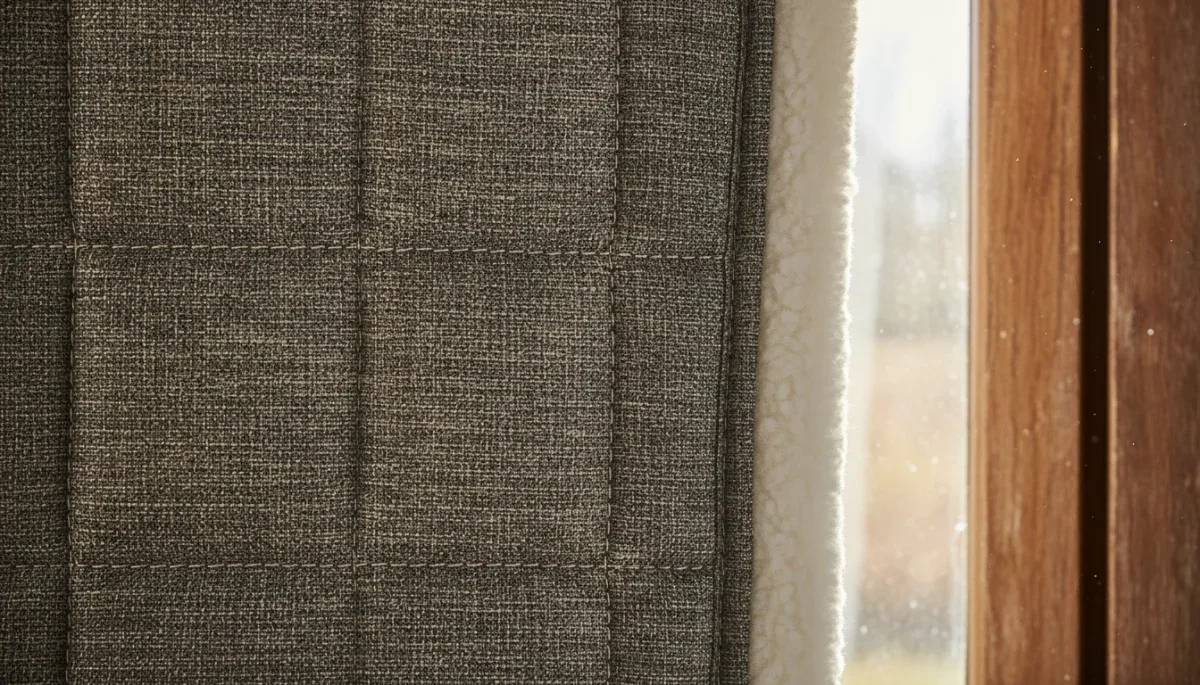
The construction of a dedicated thermal drape generally includes a decorative face fabric, an internal insulating core such as cotton flannel, polyester batting, or acrylic foam, and a protective backing layer. The backing is often treated with reflective compounds or light-toned polymers designed to bounce radiant heat back toward its source. According to information published by the U.S. Department of Energy, drawing curtains over windows can reduce indoor heat loss when draperies are hung close to the glass and sealed at the edges.
Key layers in thermal drapery
- Decorative face fabric: The visible interior layer made from woven cotton, linen, polyester, or velvet that matches home decor.
- Insulating batting core: A thick fibrous layer or dense foam core that captures still air and slows conductive heat exchange.
- Vapor and reflective backing: A specialized coating or tight weave that resists moisture vapor and reflects solar radiation in summer.
How blackout curtains handle light and temperature
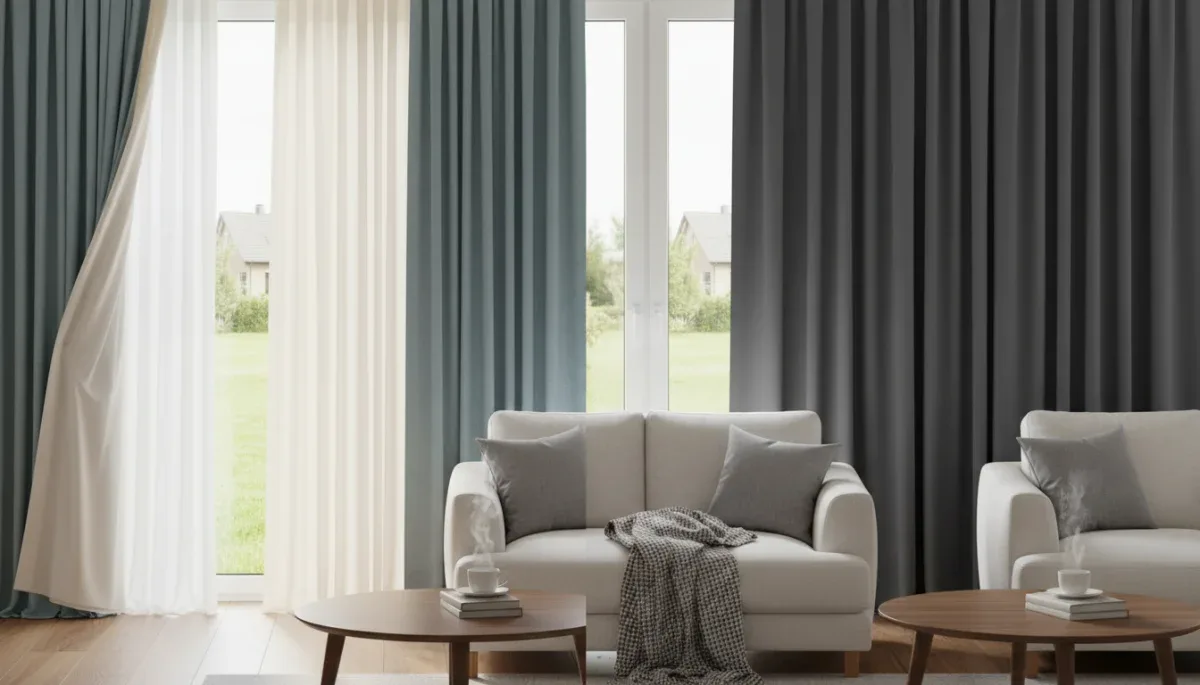
Blackout curtains are designed with the primary objective of eliminating visible light intrusion from streetlights, sunrise, and ambient glare. Manufacturers produce blackout panels using tightly woven yarn constructions, such as triple-weave technology with dense black threads in the middle, or by applying a solid acrylic coating directly to the back of standard fabric.
By blocking light, blackout curtains do provide moderate thermal benefits against radiant solar heat gain. When direct summer sunlight hits a window, an opaque blackout panel stops that radiant energy from warming interior floors and furniture. However, because standard blackout curtains lack thick internal insulation batting, they do very little to slow down conductive cold transfer during winter months. A thin blackout drape hung over drafty single-pane glass will still allow cold air to cascade down into the room.
Comparing insulation performance across seasons
Seasonal weather conditions highlight the functional differences between these two window treatments. During hot summer months, both curtain styles offer practical relief from the sun. A white-backed blackout curtain reflects incoming rays before they convert into ambient indoor heat, keeping south-facing and west-facing rooms noticeably cooler during peak afternoon hours.
In cold winter weather, thermal curtains clearly outperform blackout panels. When cold glass cools the surrounding indoor air, that heavy cold air drops toward the floor, pulling warm air down behind the curtain and establishing a continuous convective draft. The dense structure and bulk of thermal drapes disrupt this convective loop far more effectively than lightweight blackout material, provided the curtains are installed properly.
Seasonal performance factors
- Summer cooling: Both types deflect direct radiant solar gain, especially when featuring light-colored backings facing outward.
- Winter draft reduction: Thermal curtains trap cold air pockets and slow convective currents due to their thicker core density.
- Temperature regulation: Multi-layer thermal drapes moderate day-to-night temperature swings in poorly insulated spaces.
Installation methods that maximize window efficiency
A window treatment can only deliver its rated thermal insulation if installed to minimize air movement around its perimeter. Hanging even the heaviest thermal drape loosely several inches away from the wall allows warm indoor air to flow over the top, drop behind the fabric, and exit at the bottom as a chilly draft. To achieve real energy performance, you must seal the perimeter as tightly as possible.
Position curtain rods three to four inches above the window frame and extend the hardware beyond the side trim by at least three to six inches on each side. Allowing the fabric to overlap the wall prevents air from bypassing the sides. Mounting a cornice board or pelmet box above the curtain rod seals the top edge, while letting the drapery pool slightly on the floor seals the bottom.
Effective installation steps
- Mount sturdy curtain hardware high above the casing and wide past the window edges.
- Secure the outer edges of the curtain panels to the wall using magnetic strips or hook-and-loop fasteners.
- Ensure the panels overlap generously in the middle when closed to eliminate vertical air gaps.
- Install a decorative cornice or top valance to prevent warm air from dropping behind the drape.
Cost, maintenance, and durability differences
Standard blackout curtains generally cost less than dedicated thermal draperies because their manufacturing process requires fewer specialized materials and lighter assembly. Standard blackout panels are also widely available at major home goods retailers in standard lengths and lighter weights, making them compatible with basic, budget-friendly curtain rods.
Thermal curtains carry a higher price point due to their multi-layered construction and heavy-duty materials. Because of their substantial weight, they require heavy-duty curtain rods and firmly anchored wall brackets. Maintenance procedures also differ significantly. Many triple-weave blackout curtains can be laundered in home washing machines on gentle cycles. In contrast, thermal curtains with laminated foam cores or multi-layer batting often require gentle spot-cleaning or professional dry cleaning to prevent the inner layers from separating or deteriorating.
At a glance
| Feature | What to know |
|---|---|
| Primary function | Blackout curtains block light; thermal curtains insulate against heat transfer. |
| Winter performance | Thermal curtains significantly reduce convective drafts and cold glass transfer. |
| Summer performance | Both styles reduce solar heat gain when using light-colored, reflective backings. |
| Care requirements | Blackout panels are often machine washable; thermal drapes frequently need spot cleaning. |
Frequently asked questions
Can blackout curtains reduce heating bills in winter?
Blackout curtains offer only minimal winter heating support because their primary design blocks light rather than conductive heat loss. While they form a physical barrier against light breezes, their lack of thick thermal batting means cold air still circulates easily into the room without proper perimeter sealing.
Do thermal curtains completely block outdoor light?
Most thermal curtains block substantial amounts of light due to their dense, multi-layer fabric construction, but not all achieve total blackout status. If total darkness is your goal, check the product label to ensure the thermal panel explicitly includes a certified blackout barrier rating.
How should thermal curtains be hung to stop drafts?
Thermal curtains must be hung close to the glass, high above the frame, and wider than the window casing to prevent air circulation. Sealing the outer edges against the wall and adding a top valance creates a dead-air pocket that stops draft loops.
Are thermal curtains machine washable?
Many thermal curtains cannot be washed in standard machines because agitation and high dryer temperatures damage foam backings and internal batting. Always inspect the manufacturer care label before cleaning, as many multi-layer thermal panels require vacuuming, spot cleaning, or professional dry cleaning.
The bottom line
Choose thermal curtains if your main goal is stabilizing room temperature against seasonal drafts and reducing heat transfer through cold or sunny glass. Select standard blackout curtains if your primary requirement is darkening a bedroom or media room on a modest budget. Before making a purchase, measure your window frame carefully and confirm that your wall anchors can support the weight of heavy thermal hardware.
Written by
Maria Eduarda
Maria Eduarda writes about fashion & beauty for netysphere.com. Each article explains how things work, compares published details such as prices, policies and program rules, and points readers to the official source before they decide.