
Ads
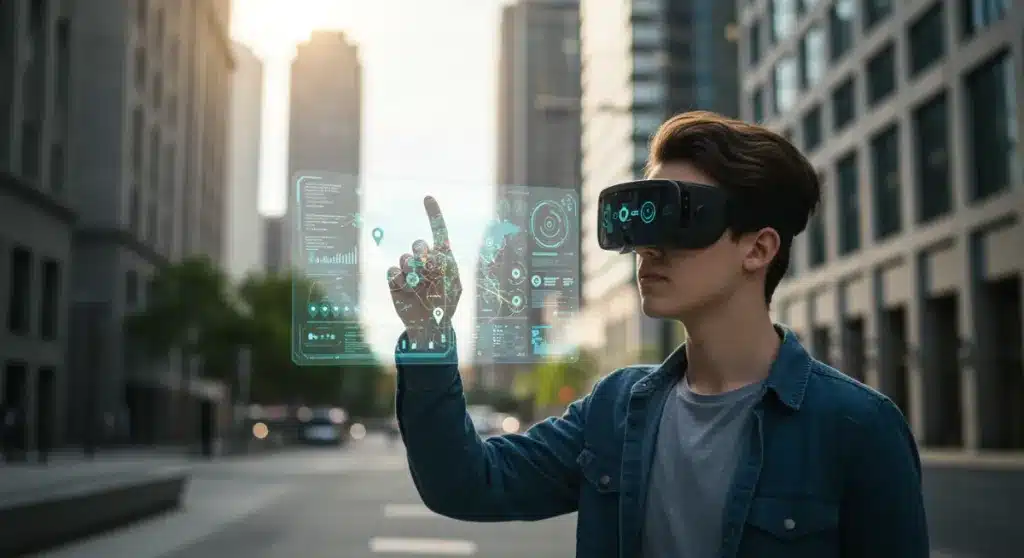
Walk down any major American street in 2026 and you might notice something different. More people are wearing glasses that look slightly futuristic, with subtle overlays of information floating at the edge of their vision. These are augmented reality glasses, and the question on everyone’s mind is simple: are they finally ready for everyday use? The answer is more nuanced than a simple yes or no, and it deserves a closer look at where the technology stands today.
Ads
After years of hype, prototypes, and cautious rollouts, Augmented Reality Glasses: Are They Ready for Everyday Use in 2026? is finally becoming a practical question rather than a science fiction fantasy. Major technology companies have refined their approaches, consumers have grown more familiar with AR concepts through smartphone applications, and the underlying hardware has shrunk considerably. Yet significant hurdles remain before AR glasses become as ubiquitous as the smartphones we carry today.
Ads
The Current State of AR Glasses Technology
The technology powering augmented reality glasses has evolved dramatically over the past few years. Where early models felt like clunky experiments, today’s leading devices offer remarkably comfortable wearing experiences with impressive visual capabilities. The optical systems have improved substantially, with waveguides and micro-LED displays delivering sharper images with better brightness than ever before.
Modern AR glasses can now project information directly onto the user’s field of view without creating the dizzying effects that plagued earlier versions. This advancement matters enormously because comfort and visual quality determine whether people will actually wear these devices for extended periods. The best 2026 models weigh less than 80 grams, a far cry from the heavy headsets that made headlines just three years ago.
Key Technical Improvements
- Display resolution has reached near-retina quality in central vision areas
- Battery life now extends to 8-10 hours under normal usage conditions
- Field of view has expanded to approximately 50 degrees in premium models
- Voice control and gesture recognition work reliably in most environments
The processing power inside these glasses has also kept pace with demands. Dedicated AR chips handle the complex calculations required for spatial mapping and object recognition, freeing the glasses from dependence on connected smartphones for most everyday tasks. This independence marks a crucial turning point in making AR glasses genuinely practical for daily wear.
Major Players and Their 2026 Offerings
The augmented reality glasses market in 2026 features several established technology companies competing for consumer attention. Each has taken a distinct approach, reflecting different visions for how AR should integrate into daily life. Understanding these differences helps explain where the market is heading.
Apple has continued refining its Vision product line, offering a premium experience that integrates seamlessly with other Apple devices. The company’s focus on productivity and creative applications has attracted professionals willing to invest in the ecosystem. Meanwhile, Meta has pursued a more social approach, emphasizing communication features and entertainment possibilities that appeal to younger demographics.
Market Overview by Company
- Apple focuses on premium productivity and creative professionals
- Meta targets social interaction and entertainment-focused consumers
- Samsung offers mid-range options balancing price and functionality
- Various startups explore niche applications in healthcare and industrial sectors
Samsung has taken a middle-ground position, offering devices that work well across both Android and iOS ecosystems. This兼容性 has helped the company capture consumers who want AR capabilities without committing to a single platform. Meanwhile, smaller companies have found success targeting specific professional markets, providing specialized solutions for surgeons, engineers, and warehouse workers who benefit from hands-free information access.
Technical Challenges Still Affecting Mass Adoption
Despite remarkable progress, several technical challenges continue limiting how widely AR glasses can spread. Battery life remains the most significant constraint. While eight to ten hours sounds impressive, heavy use of AR features can drain batteries much faster, leaving users stranded without their devices when they need them most. The challenge of cramming sufficient power storage into lightweight frames without adding bulk has proven surprisingly difficult.
Heat management presents another underappreciated hurdle. The processors required to render AR content generate substantial heat, and placing them so close to the user’s face creates genuine discomfort during extended use. Engineers have made progress on this front, but the problem hasn’t been completely solved. Users report that their glasses can become noticeably warm during intensive tasks like video recording or complex navigation.
Remaining Technical Hurdles
- Battery capacity limitations restrict all-day heavy usage
- Heat generation affects user comfort during extended wear
- Outdoor visibility remains challenging in bright sunlight
- Limited storage and processing for complex AR applications
Outdoor visibility deserves special attention because it directly impacts where people can actually use their devices. In bright sunlight, many AR glasses struggle to display information clearly, reducing their utility for outdoor workers or anyone spending time outside. This limitation significantly narrows the contexts where AR glasses feel genuinely useful, constraining their everyday applicability.
Real-World Use Cases and Consumer Interest
What do people actually do with AR glasses in their daily lives? The answer reveals both the promise and the current limitations of the technology. Navigation remains the killer application, with turn-by-turn directions appearing directly in the user’s field of view proving genuinely useful for walking, cycling, and driving. This practical benefit alone justifies the devices for many users who have grown tired of constantly looking at phone screens.
Communication features have also resonated strongly with consumers. The ability to take calls, send messages, and participate in video chats without reaching for a phone feels remarkably convenient. Some users report that AR glasses have reduced their phone usage significantly, though whether this represents genuine digital wellness or simply adds another screen to manage remains debatable.
Most Popular Consumer Applications
- Hands-free navigation for walking and driving
- Instant call handling and messaging
- Music playback control and podcast listening
- Recipe display while cooking and hands-free tutorials
- Fitness tracking with real-time workout guidance
Professional applications have emerged as surprisingly important use cases. Healthcare workers use AR glasses to access patient information without breaking sterile procedures. Field technicians receive remote guidance from experts while keeping their hands free to work. These business applications may drive more meaningful adoption than consumer marketing ever could, creating steady demand that sustains the market even before consumer appeal reaches full maturity.
Price Points and Accessibility
Cost has historically been a major barrier to AR glasses adoption, and the situation in 2026 reflects both progress and persistent challenges. Premium models from Apple and Meta still carry price tags ranging from $1,500 to $3,500, putting them firmly in luxury territory for most American consumers. These prices limit adoption to early adopters, professionals with specific needs, and affluent technology enthusiasts.
However, more affordable options have emerged that bring AR capabilities within reach of mainstream budgets. Mid-range devices now cost between $500 and $800, representing a significant reduction from just two years ago. These models sacrifice some advanced features but deliver core AR functionality effectively. The question becomes whether consumers view this pricing as reasonable for the value provided.
Current Market Pricing Tiers
- Premium tier: $1,500-$3,500 for maximum features and performance
- Mid-range: $500-$800 for solid everyday functionality
- Budget options: $200-$400 for basic AR features and notifications
- Enterprise models: $2,000+ for specialized professional applications
Insurance and employer coverage have begun appearing as adoption drivers in unexpected ways. Some vision insurance plans now offer partial coverage for AR glasses with medical or accessibility applications. Employers in logistics, healthcare, and manufacturing increasingly provide AR glasses as work tools, creating a pathway for workers to experience the technology regularly. These institutional channels may prove more important for mass adoption than consumer marketing alone.
What to Expect in the Coming Years
Looking beyond 2026, the trajectory of AR glasses technology suggests continued improvement at a steady pace. Display technology will likely advance further, with higher resolutions and brighter outputs becoming standard even in affordable models. Battery technology improvements promise longer life between charges, potentially solving the most annoying daily limitation users currently experience.
Artificial intelligence integration represents perhaps the most exciting frontier for AR glasses development. The combination of AR visual overlay with AI processing creates possibilities that haven’t existed before. Imagine walking down a street and receiving real-time information about businesses, historical sites, or people you encounter. Picture having a conversation in a foreign language with instant translation appearing in your field of view. These scenarios feel increasingly plausible as AI capabilities expand.
Near-Future Developments to Watch
- Improved AI integration for contextual information overlay
- Better outdoor visibility through advanced display technology
- Expanded health monitoring features including vital signs
- Broader app ecosystem with more third-party development
- Reduced prices as manufacturing scales and technology matures
Social acceptance continues evolving as more people wear AR glasses in public. The initial awkwardness of being the only person wearing a computer on your face gradually diminishes as the technology becomes more normal. This social normalization may prove as important as any technical improvement in driving widespread adoption.
Conclusion
So, are augmented reality glasses ready for everyday use in 2026? The honest answer sits comfortably in the middle ground. These devices have evolved from interesting experiments into genuinely useful tools for specific applications and certain users. Navigation, communication, and selected professional applications provide clear value that justifies the investment for many people. Yet significant limitations in battery life, cost, and social acceptance prevent AR glasses from becoming universal everyday devices for the general population.
The technology has reached a tipping point where early adopters and specific professional users can benefit meaningfully. Mainstream adoption will likely emerge gradually over the next several years as prices decline, batteries improve, and social familiarity grows. For those curious about AR glasses, 2026 offers the most compelling selection yet, though patience may reward those who can wait for the next generation of improvements.
| Key Point | Brief Description |
|---|---|
| Technology Maturity | AR glasses now offer comfortable wear, improved displays, and 8-10 hour battery life, making them genuinely practical for daily use. |
| Market Options | Multiple companies offer devices across price tiers from $200 premium options to $3,500 professional models. |
| Remaining Challenges | Battery limitations, outdoor visibility issues, and cost still restrict mass adoption for mainstream consumers. |
| Future Outlook | Continued improvements in AI integration, display technology, and pricing suggest steady growth toward mainstream adoption. |
Frequently Asked Questions
AR glasses are worth buying for specific use cases like navigation, hands-free communication, and certain professional applications. However, they may not yet justify the cost for users seeking a complete smartphone replacement or general everyday device.
Most 2026 AR glasses offer 8-10 hours of battery life under normal usage conditions. Heavy AR feature usage can reduce this to 4-6 hours, so users should plan accordingly for full-day activities.
AR glasses cannot fully replace smartphones in 2026 due to limitations in text input, complex app functionality, and battery constraints. They work best as supplements to smartphones rather than replacements.
Modern AR glasses weigh under 80 grams and are comfortable for extended wear for most users. However, heat buildup and fit variations can cause discomfort during very long sessions or for users with specific head shapes.
AR glasses prices will likely continue declining as manufacturing scales and technology matures. Mid-range models under $500 are expected within the next two to three years, making the technology more accessible to mainstream consumers.
Conclusion
Augmented reality glasses have traveled an impressive path from science fiction concept to genuine consumer product. The technology available in 2026 offers real value for specific use cases and users, even if widespread everyday adoption remains on the horizon. For Americans curious about experiencing augmented reality firsthand, this year offers the most practical selection of devices yet. The key is understanding what these devices can currently accomplish and managing expectations accordingly. As the technology continues evolving, the question will shift from whether AR glasses are ready to how quickly they will become essential everyday tools.
