
Ads
Ads
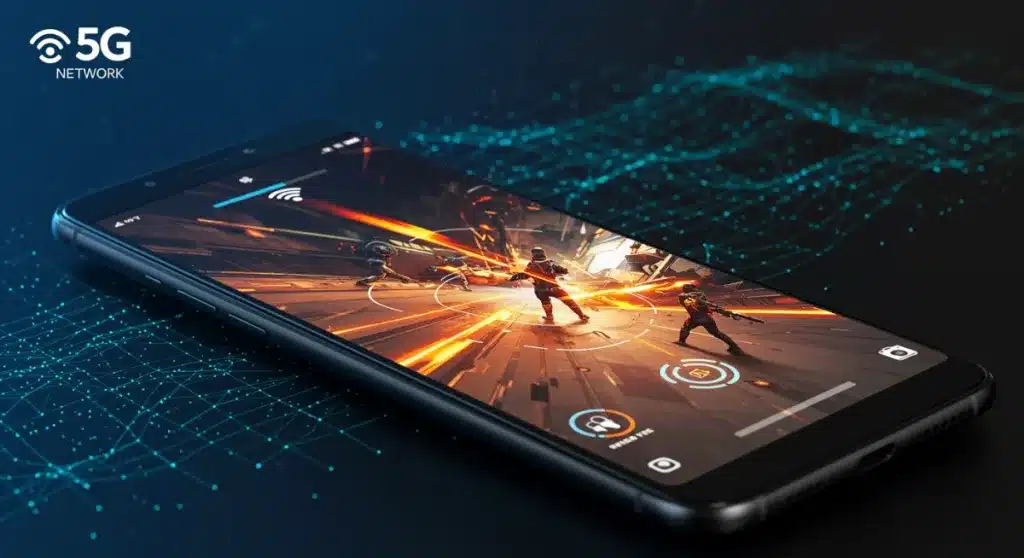
5G mobile gaming delivers latency under 10 milliseconds, enabling real-time multiplayer battles, cloud streaming, and console-quality experiences on smartphones without physical hardware limitations.
Ads
The landscape of mobile gaming is experiencing a fundamental shift thanks to 5G mobile gaming technology. What once required expensive consoles or powerful PCs now fits in your pocket, delivering experiences that feel instantaneous. The promise of ultra-low latency is no longer theoretical—it is actively reshaping how millions of players engage with games on their smartphones across the United States.
Understanding 5G and Low Latency in Mobile Gaming
Latency measures the delay between your input and the game’s response. In competitive gaming, even a fraction of a second can determine victory or defeat. Traditional 4G networks typically deliver latency between 50 to 100 milliseconds, which creates noticeable lag in fast-paced action games. 5G technology reduces this to under 10 milliseconds in optimal conditions, effectively eliminating the perception of delay.
This dramatic improvement stems from 5G’s advanced network architecture. The technology uses higher frequency bands called millimeter waves, massive MIMO (Multiple Input Multiple Output) antenna systems, and network slicing capabilities that allocate dedicated bandwidth for gaming traffic. These technical advancements work together to create connections that feel instantaneous to human perception.
The practical impact extends beyond simple responsiveness. Games that once required stable Wi-Fi connections now run smoothly over cellular networks, enabling true mobile freedom. Players can engage in intense multiplayer sessions during commutes, at parks, or anywhere with 5G coverage without sacrificing the competitive edge that low latency provides.
Key Latency Improvements
- 4G average: 50-100ms delay between input and response
- 5G average: under 10ms, approaching human reaction time limits
- Edge computing: processes game data closer to users, reducing travel distance
- Network slicing: prioritizes gaming traffic for consistent performance
These improvements matter most in genres where reaction time directly impacts success. First-person shooters, fighting games, and real-time strategy titles all benefit significantly from reduced latency, creating more fair and enjoyable competitive environments.
The Technology Behind 5G’s Speed Improvements
5G networks achieve their remarkable performance through several interconnected technological innovations. Understanding these mechanisms helps explain why the gaming experience differs so dramatically from previous cellular generations.
The millimeter wave spectrum represents the most visible difference. These high-frequency waves, ranging from 24GHz to 100GHz, carry enormous amounts of data but travel shorter distances. Cellular providers deploy dense networks of small cells to compensate, creating a mesh of connectivity that maintains strong signals throughout coverage areas.
Massive MIMO technology adds another dimension to performance. Where 4G antennas might handle a handful of simultaneous connections, Massive MIMO systems support hundreds of devices per cell. This capability ensures that gaming sessions remain stable even in crowded venues like stadiums or convention centers where many users compete for bandwidth.
Network slicing allows providers to create virtualized pathways optimized specifically for gaming traffic. Rather than sharing bandwidth with general internet usage, gaming data travels through dedicated channels that prioritize speed and consistency. This separation prevents sudden latency spikes when network traffic surges during peak hours.
Technical Components
- Millimeter waves: 24-100GHz frequencies carrying massive data loads
- Massive MIMO: advanced antenna systems handling hundreds of simultaneous connections
- Edge computing: local servers processing game data near users
- Network slicing: dedicated virtual pathways for gaming traffic
The combination of these technologies creates a gaming infrastructure that rivals wired home internet connections. Players accustomed to experiencing lag on 4G networks often describe their first 5G gaming sessions as revelatory—the games simply respond instantly, creating an entirely different emotional connection between player and device.
Real-World Benefits for Mobile Gamers
The practical advantages of 5G mobile gaming extend across every genre and playstyle. Casual players notice smoother gameplay and faster loading times, while competitive gamers discover new possibilities for skill expression and strategic depth.
Download speeds exceeding 1Gbps enable games to install in seconds rather than minutes. Large titles that once required Wi-Fi and extended download sessions now transfer quickly during brief cellular connections. This convenience factor alone transforms the mobile gaming experience, making it more accessible to players with busy lifestyles.
Streaming gaming services benefit enormously from 5G’s capabilities. Titles that previously required powerful local hardware now run on remote servers, streaming video and audio to smartphones with minimal delay. This approach, often called cloud gaming, makes high-end experiences available on modest devices, democratizing access to premium gaming content.
Augmented reality games particularly shine on 5G networks. Titles like Pokémon GO and newer AR experiences require real-time environmental processing and instant response to player movements. The low latency of 5G makes these experiences feel genuinely integrated with the real world, eliminating the disconnection that higher latency creates.
Genre-Specific Advantages
- First-person shooters: near-instant hit registration and同步
- Fighting games: frame-perfect inputs without delay
- Real-time strategy: immediate unit commands and updates
- Battle royale: large-scale player coordination without desync
Players who have transitioned to 5G gaming frequently report abandoning their previous gaming setups entirely. The convenience of smartphone gaming combined with console-quality responsiveness eliminates the need for dedicated hardware in many scenarios.
Multiplayer Gaming Reimagined
Multiplayer experiences represent perhaps the most significant beneficiary of 5G mobile gaming improvements. The technology addresses longstanding frustrations that previously limited mobile competitive gaming’s growth.
Synchronization between players historically caused the most issues in mobile multiplayer games. When players on different networks experience varying latency, games must reconcile these differences, often resulting in rubber-banding effects where characters teleport or move erratically. 5G’s consistent low latency minimizes these discrepancies, creating smoother collaborative and competitive experiences.
Team-based games particularly benefit from improved connectivity. Coordinating with three or four teammates requires all connections to remain stable and responsive. Any single player experiencing lag can disrupt entire team strategies, making uniform low latency across all participants essential for enjoyable group gaming sessions.
Cross-platform play becomes more viable with 5G technology. Players on smartphones can now compete fairly against those on consoles or PCs, provided everyone enjoys low-latency connections. This equality opens new competitive ecosystems where devices matter less than skill and dedication.
Multiplayer Enhancements
- Consistent synchronization across all players
- Reduced rubber-banding and disconnects
- Fair cross-platform competition
- Stable team coordination
The social dimension of gaming grows stronger when connections remain reliable. Friends can organize gaming sessions spontaneously, knowing that cellular networks will deliver the same quality experience as home Wi-Fi. This reliability transforms mobile gaming from a solitary pastime into a genuinely social activity.
Cloud Gaming and Streaming on 5G Networks
Cloud gaming services have existed for years, but 5G networks finally make them practical for mass adoption. The technology addresses the primary barrier that prevented previous cloud gaming success: latency between player input and server response.
Services like Xbox Cloud Gaming, NVIDIA GeForce NOW, and cloud-native mobile platforms now deliver near-native experiences through 5G connections. Players access full game libraries without downloading titles, streaming gameplay directly to their devices. The processing happens on remote servers, powerful gaming computers that would cost thousands of dollars to purchase locally.
This streaming approach democratizes access to premium gaming content. A mid-range smartphone can now run graphically demanding titles that previously required specialized gaming hardware. The financial barrier to high-quality gaming drops significantly, expanding the audience for sophisticated gaming experiences.
Game developers also benefit from cloud streaming capabilities. Titles can offload processing to cloud servers, enabling more ambitious visual designs on mobile devices. This approach pushes the boundaries of what players expect from smartphone gaming, continually raising the quality bar.
Cloud Gaming Advantages
- Access to premium titles without expensive hardware
- Instant game streaming without downloads
- Cross-device progression and saves
- Enhanced graphical capabilities through server processing
The subscription model underlying most cloud gaming services also provides economic advantages. Players pay monthly fees for access to extensive game libraries rather than purchasing individual titles, reducing the financial commitment required to enjoy diverse gaming experiences.
Future of Mobile Esports with 5G
The emergence of 5G mobile gaming creates entirely new competitive ecosystems. Esports organizations increasingly recognize smartphone gaming as a legitimate competitive platform, investing in dedicated mobile teams and tournaments.
Major esports events now feature mobile gaming divisions with substantial prize pools. Games like PUBG Mobile, Call of Duty Mobile, and League of Legends: Wild Rift draw millions of viewers and offer professional players viable career paths. The low latency of 5G networks ensures these competitions remain fair and exciting.
Infrastructure investments by cellular providers directly support this growth. Major carriers across the United States continue expanding 5G coverage, particularly in urban areas where esports tournaments commonly occur. This infrastructure investment signals confidence in mobile gaming’s competitive future.
Spectator experiences improve alongside competitive play. Streaming mobile esports to audiences requires reliable upload capabilities that 5G networks provide. Viewers enjoy lag-free streams, while players compete on networks that match the quality of dedicated esports venues.
Esports Development
- Growing professional mobile gaming teams and organizations
- Increasing tournament prize pools for mobile divisions
- Expanding 5G coverage in competitive gaming venues
- Improved spectator streaming quality
The professional mobile gaming scene will likely continue expanding as 5G coverage improves. Players who once considered mobile gaming a casual pastime now recognize its potential for serious competition and career development.
Challenges and Considerations
Despite the remarkable progress, 5G mobile gaming faces ongoing challenges that players and developers must navigate. Understanding these limitations helps set realistic expectations for the technology’s current capabilities.
Coverage remains inconsistent across different regions. While major metropolitan areas enjoy robust 5G access, rural locations often lack coverage entirely. Players in these areas continue relying on 4G networks, which cannot deliver the low-latency experiences that 5G enables. This digital divide creates unequal gaming experiences based on geographic location.
Device compatibility presents another barrier. Older smartphones lack 5G capabilities, requiring hardware upgrades to access improved networks. While flagship devices from the past three years generally support 5G, budget-conscious players may find the transition cost-prohibitive.
Data consumption raises concerns for players on limited cellular plans. Cloud gaming and streaming services consume significant data, potentially exceeding monthly allowances quickly. Players must carefully monitor usage or invest in unlimited data plans to avoid unexpected charges.
Current Limitations
- Inconsistent rural and suburban coverage
- Device upgrade requirements for 5G access
- High data consumption for cloud gaming
- Variable network performance during congestion
These challenges do not diminish the significant progress 5G mobile gaming represents. Rather, they outline the roadmap for continued improvement as technology advances and infrastructure expands.
| Key Point | Brief Description |
|---|---|
| Ultra-Low Latency | 5G delivers under 10ms latency compared to 50-100ms on 4G, enabling near-instant response times for competitive gaming. |
| Cloud Gaming Access | Streaming high-end games becomes practical with 5G, allowing budget smartphones to run graphically demanding titles. |
| Enhanced Multiplayer | Synchronized multiplayer experiences eliminate rubber-banding and disconnects, creating fair competitive environments. |
| Esports Growth | Professional mobile gaming scenes expand as 5G enables console-quality competition on smartphones. |
Frequently Asked Questions
5G networks typically reduce latency to under 10 milliseconds compared to 50-100 milliseconds on 4G networks. This represents approximately a 90% reduction in delay, making gameplay feel nearly instantaneous to human perception. The improvement proves particularly noticeable in competitive games requiring quick reactions.
Yes, you need a 5G-capable smartphone to access 5G networks. Most flagship devices released since 2020 include 5G modems, while budget devices may still only support 4G. Check your device specifications to confirm 5G compatibility before subscribing to 5G plans or expecting low-latency gaming performance.
Cloud gaming services like Xbox Cloud Gaming, NVIDIA GeForce NOW, and PlayStation Now work excellently on 5G networks. The low latency and high bandwidth make streaming gameplay practical, allowing even mid-range smartphones to run graphically demanding titles. However, these services consume significant data, so unlimited data plans are recommended.
5G coverage varies significantly across the United States. Major metropolitan areas generally have strong 5G access, while rural and some suburban regions still lack coverage. Coverage continues expanding as cellular providers invest in infrastructure. Players in areas without 5G access will experience 4G performance, which offers significantly higher latency.
Competitive multiplayer games, first-person shooters, fighting games, and real-time strategy titles benefit most from 5G’s low latency. Any game where reaction time impacts success sees significant improvement. Cloud gaming services also benefit enormously, as 5G enables streaming experiences that were previously impractical on cellular networks.
Conclusion
The transformation of mobile gaming through 5G technology represents a watershed moment in interactive entertainment. The ultra-low latency, enhanced bandwidth, and reliable connectivity create experiences that rival traditional gaming hardware, all from the convenience of smartphones. As 5G coverage continues expanding across the United States and more players discover these capabilities, mobile gaming will increasingly become the preferred platform for millions of players seeking accessible, high-quality entertainment. The future of gaming fits in your pocket, and that future is arriving now.
